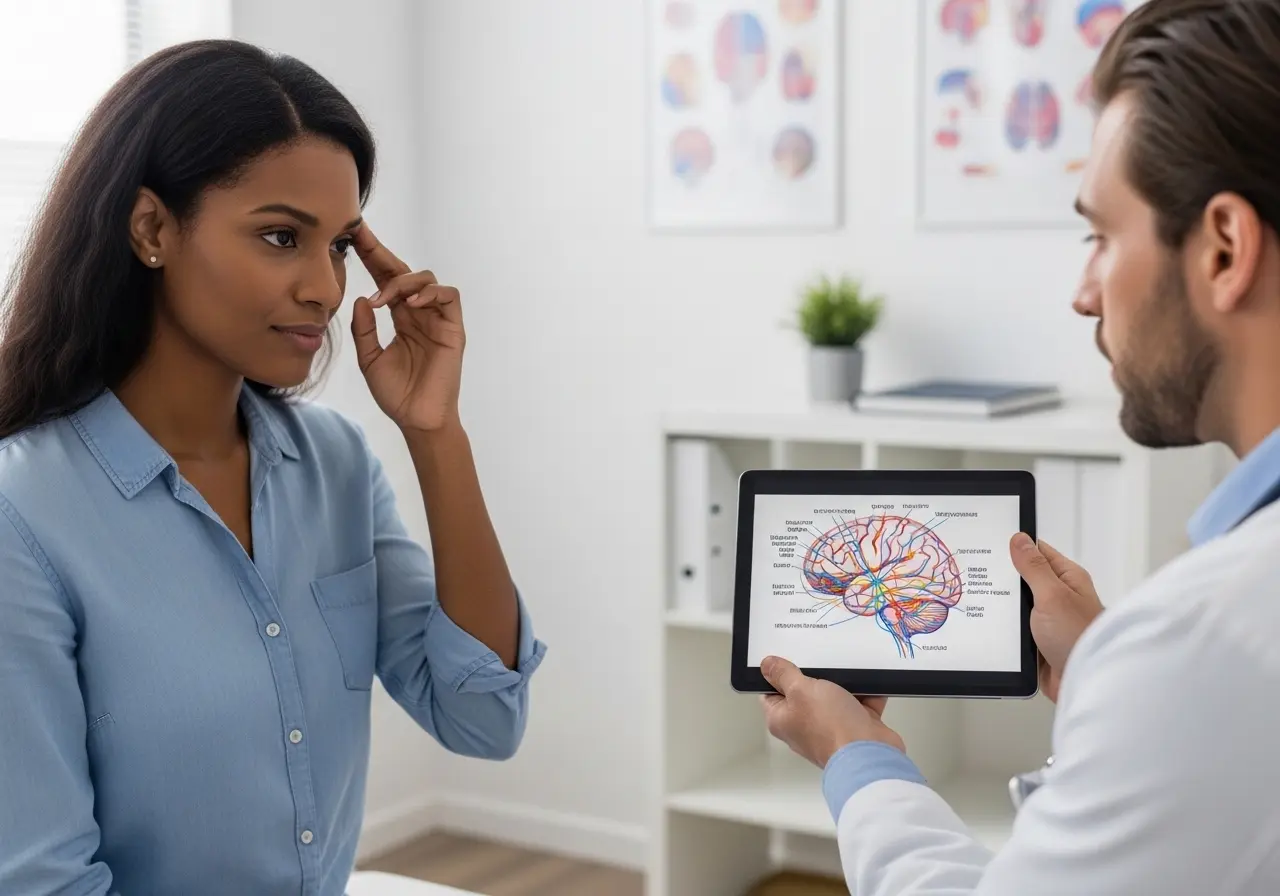
There is a particular kind of worry that settles in when something about a person you love starts to feel different. Maybe your mother keeps losing her train of thought mid sentence. Maybe your father stumbled twice this week for no obvious reason. Maybe your spouse mentioned a strange burning sensation in their face that comes and goes and they cannot quite explain it.
You start watching more carefully. You start wondering.
Most families I have worked with did not come to me with a clear diagnosis in hand. They came with a feeling. Something is not right, and they needed help figuring out whether it was serious. More often than not, when we sat down together and went through what they had been observing, the pieces started to point somewhere.
Understanding the symptoms of nerve problems in the brain is not just useful for medical professionals. It is something every family caregiver deserves to know, because the earlier these signs are recognized, the more options there are for getting ahead of whatever is happening.
Understanding Nerve Problems in the Brain
The brain is constantly working, even when we sleep. It sends signals down through the spinal cord and out to every corner of the body, and it receives information back just as constantly. That back and forth is what allows a person to feel their feet on the floor, recognize a familiar face, find the right word, or catch themselves before they fall.
When the nerve tissue in the brain is damaged or inflamed, that communication starts to break down. It does not always fail all at once. More often it is gradual, like a slow leak. Signals that used to travel clearly now arrive distorted or delayed, or sometimes do not arrive at all.
What makes nerve problems in the brain particularly hard to recognize early on is that the brain does so much. There is no single symptom that covers everything. Depending on where in the brain the disruption is happening, two people with very similar damage could have completely different experiences. One person might struggle with memory. Another might have trouble with balance. A third might describe strange pain or tingling that no one around them can see or verify.
That unpredictability is real, and it is part of why families often go weeks or months before connecting what they are seeing to something neurological.
Common Causes of Nerve Problems in the Brain
Nerve problems in the brain do not always come from one obvious source. There are several different things that can set them in motion, and sometimes more than one is involved at the same time.
Head Injuries
Falls are one of the leading causes of brain related nerve damage in older adults. A hit to the head does not have to be dramatic to cause real harm. Sometimes a person falls, feels shaken but mostly okay, and then over the following days or weeks begins showing signs that something is not right. The nerve damage from a head injury can take time to fully express itself, which is why families and caregivers need to stay alert even after what seemed like a minor incident.
Stroke
A stroke cuts off blood supply to part of the brain. Without oxygen, brain tissue begins to die within minutes. Strokes can cause sudden and dramatic symptoms, but smaller strokes, sometimes called mini strokes or TIAs, can produce subtler signs that are easier to overlook. Either way, the nerve damage left behind can affect movement, speech, cognition, and sensation depending on which part of the brain was hit.
Neurological Disorders
Conditions like multiple sclerosis, Parkinson’s disease, and peripheral neuropathy work differently from acute events like strokes, but they also gradually erode the way the nervous system functions. Families often describe a slow building awareness that their loved one has been changing for a while before anyone puts a name to what was happening.
Infections and Inflammation
Certain infections can reach the brain or the fluid surrounding it and cause serious inflammation. Meningitis, encephalitis, and some long tail infections like untreated Lyme disease can all interfere with how nerves in the brain operate. These are less common but worth knowing about, especially when neurological symptoms appear alongside fever, stiff neck, or recent illness.
The Role of Aging
The nervous system ages along with the rest of the body. Nerve signals slow down. Blood vessels that feed the brain become less flexible. The brain’s ability to bounce back from stress or injury gradually diminishes. This does not mean neurological decline is inevitable, but it does mean that older adults are more vulnerable and that the causes of nerve pain in the head in seniors often involve a layering of factors rather than a single clear culprit.
Early Symptoms of Nerve Problems in the Brain
Early neurological symptoms are easy to brush off. They often look like fatigue, normal forgetfulness, or just a rough week. But when families look back, they frequently realize the signs had been present for longer than they initially thought.
Some of the most common early indicators include headaches that feel different in character or location from what the person normally experiences, episodes of dizziness or a sense that the room is tilting, confusion in situations that should be routine, numbness or tingling that appears in the face, hands, or feet without an obvious explanation, and difficulty staying focused during a conversation or following a simple sequence of tasks.
Mood changes also show up early for many people. A person who was generally even tempered might become irritable or anxious. Someone social might start pulling back from people they used to enjoy spending time with. These behavioral shifts can be the first hint of something neurological long before more obvious symptoms appear.
These are among the earlier symptoms of nerve problems in the brain that families tend to notice, even if they do not initially recognize them as such. The pattern matters more than any single instance. When these kinds of changes keep coming up and are not explained by something straightforward like illness or a difficult life event, they deserve a closer look.
Symptoms of Nerve Pain in the Brain
When nerve damage progresses or a condition directly affects the cranial nerves, pain often enters the picture. This is not the kind of headache that eases with ibuprofen and a nap. The symptoms of nerve pain in the brain tend to be sharper, more unpredictable, and far more disruptive to daily life.
People describe this pain in different ways, but common themes come up repeatedly. A sudden stabbing sensation in the head that hits and then vanishes as quickly as it came. A burning or electric feeling across the scalp or face. A deep pressure behind the eyes that does not let up. Pain that shoots down into the jaw, neck, or shoulders. Sensitivity to light or sound that feels out of proportion to the stimulus.
For some people, the pain comes in brief intense bursts. For others it is a constant low hum that wears on them day after day. Conditions like trigeminal neuralgia, which affects a major nerve in the face, and occipital neuralgia, which involves the nerves running from the base of the skull up over the scalp, are two specific diagnoses that produce exactly this kind of nerve pain in the head.
Doctors often look for patterns when evaluating this kind of pain. Where exactly is it located? Does it travel? What triggers it? How long does each episode last? These details help narrow down what type of nerve involvement is present and what treatment approach makes the most sense.
Symptoms of Nerve Damage After a Head Injury
One of the things I always tell families after a loved one has had a fall or hit their head is this: the days after the injury matter just as much as the moment of impact, sometimes more.
The symptoms of nerve damage after head injury do not always appear right away. A person can walk away from a fall feeling sore but basically fine, and then gradually develop signs over the following one to three weeks that point to something more serious happening inside the brain.
Headaches are usually the first thing people notice, but what raises concern is when they do not improve the way a normal bump headache would. Instead they slowly worsen, or they change in character. Balance problems are another red flag, especially if a person who was steady on their feet before the injury now seems to drift, stumble, or feel uncertain when walking.
Memory becomes an issue for some people following head trauma. They might ask the same question multiple times without realizing it, or lose track of events from the days before or after the injury. Numbness and tingling can develop in the face or limbs. Mood swings, unusual irritability, or emotional flatness that was not present before the injury can also signal that the nervous system took a hit.
Ringing in the ears, increased sensitivity to noise, and a feeling of mental slowness are also things to pay attention to after any significant head impact. If any of these appear, especially if they are new or getting worse rather than better, that is a reason to get a medical evaluation without delay. A slow bleed inside the skull can produce exactly this kind of gradual symptom pattern, and it requires treatment.
How Nerve Problems Affect Daily Life
Describing neurological symptoms in a list does not fully capture what it is like to live with them or to watch someone you love navigate them every day. The effects reach into every corner of ordinary life.
Memory and Thinking
Cognitive changes can be some of the most disorienting for both the person experiencing them and for family members. When someone can no longer reliably remember conversations, keep track of their medications, or follow a simple recipe they have made for years, it affects their confidence and independence deeply. Families often carry significant grief around this, even when they do not name it as such.
Balance and Movement
A person who no longer trusts their own legs moves through the world differently. They might grip furniture as they walk through a room, avoid going outside alone, or stop doing activities they used to enjoy. The risk of falling creates anxiety, and that anxiety itself can make the physical symptoms worse over time.
Speech and Language
Some neurological conditions affect the areas of the brain responsible for language. A person might struggle to find words mid conversation, speak more slowly, or have difficulty understanding what is being said to them. These communication challenges can feel isolating, particularly for someone who was always sharp and expressive.
Emotional and Behavioral Changes
The emotional fallout from nerve problems in the brain is often underestimated. Depression, anxiety, impulsivity, and mood instability can all result from changes in the brain’s chemistry and structure. These are not character flaws or weakness. They are symptoms, and they deserve to be addressed as such.
When Nerve Problems Require Immediate Medical Attention
There are some symptoms that cannot wait for a scheduled appointment. If you are with someone who shows any of the following, call emergency services immediately.
Sudden weakness or numbness appearing on one side of the body, particularly in the face, arm, or leg, needs emergency evaluation. A severe headache that comes on suddenly and feels unlike anything the person has had before is a classic warning sign of a brain bleed. Sudden confusion, inability to speak clearly, or trouble understanding what someone is saying are all red flags. The same goes for vision problems that come on abruptly, a sudden loss of coordination or difficulty walking, a seizure in someone without a prior history of them, or any loss of consciousness.
These symptoms can indicate a stroke, a hemorrhage, or another condition where every minute of delay increases the potential for lasting damage. The phrase healthcare providers use is time is brain, because that is literally what is at stake. Act fast.
For symptoms that are not acute but are new, persistent, or gradually worsening, a prompt call to a primary care physician or neurologist is the right step. Not every neurological concern is an emergency, but none of them should be indefinitely ignored.
Caring for Seniors With Neurological Symptoms
There is a particular kind of exhaustion that comes with being a family caregiver for someone with neurological issues. It is not just the physical demands, though those are real. It is the constant watchfulness. The uncertainty about what is coming next. The grief of watching someone change.
If this is where you are right now, the most practical thing I can offer is this: you do not have to figure it all out at once, and you do not have to do it alone.
Keeping a written log of what you observe, including what you noticed, when it happened, and what else was going on at the time, gives doctors something concrete to work with during appointments. It also helps you track whether things are staying the same, improving, or slowly declining, which matters for treatment decisions.
Making the home safer is something families can start immediately. Clear walkways, good lighting, a shower chair, grab bars near the toilet and tub, and a bedside nightlight can all reduce fall risk significantly. Establishing consistent daily routines helps reduce anxiety and confusion, particularly for someone whose memory or cognition is affected.
Patience with communication is something caregivers sometimes underestimate how much it matters. Allowing extra time, not finishing sentences for someone, and staying calm when repetition happens are small things that make a real difference in how the person feels day to day.
When the weight of it becomes too much to carry alone, personalized home care services provide not just relief but genuine expertise. A trained caregiver brings consistency, professional observation skills, and the ability to assist with daily living assistance for seniors in ways that help maintain dignity and routine.
The Role of Home Health Care for Neurological Conditions
Families often first consider professional home care when they reach a point where they realize they cannot be everywhere at once. Maybe both adults in a household work. Maybe the senior lives alone and the family is managing from a distance. Maybe the physical demands of caregiving have simply exceeded what one or two people can safely provide.
A professional caregiver does more than help with bathing and meals, though both matter. They observe. They notice when something is different from the day before. They build enough of a relationship with the person in their care to recognize when behavior or mood has shifted, and they communicate that to families and healthcare providers.
For families in the Chicago area, home health care in Illinois has become a meaningful resource for seniors living with neurological conditions. Communities in the southwest suburbs have seen particular growth in these services, and families looking into home health care services in Lemont have access to providers who specialize in working with seniors dealing with stroke recovery, Parkinson’s, dementia, and other neurological diagnoses.
Whether someone is searching for home care Lemont IL after a parent’s recent hospitalization, exploring elderly home care Lemont IL for someone with worsening balance and cognitive symptoms, or looking for senior home care in Lemont IL to provide regular daily support, these services are designed to meet people where they are rather than requiring them to uproot from familiar surroundings.
The cost question comes up in almost every family conversation about professional care. Many families do not realize until they ask that in home health care insurance may cover some or all of the expense depending on the plan. It is always worth a conversation with the insurer before assuming care is out of reach.
Preventing and Managing Nerve Problems
Not every neurological condition can be prevented. But the research is fairly consistent that the habits people build over years do have a meaningful effect on how the brain ages and how well it recovers when something goes wrong.
Keeping chronic conditions under control is probably the most important lever families have. High blood pressure is one of the leading contributors to stroke and white matter damage in the brain. Poorly managed diabetes affects blood vessels and nerves throughout the body, including in the brain. Regular checkups allow these conditions to be monitored and adjusted before they cause compounding damage.
Physical activity matters more than many people realize. It does not need to be intense. Regular walking, gentle stretching, water aerobics, or even seated exercise programs support circulation, help maintain balance, and have been shown to slow cognitive decline. The brain benefits directly from movement.
Nutrition plays a role too. Diets that emphasize fish, nuts, olive oil, leafy greens, and berries support brain health in measurable ways. Limiting heavily processed foods, excess sugar, and alcohol also helps reduce inflammation, which is connected to nerve damage over time.
Sleep is chronically undervalued in conversations about neurological health. The brain clears waste products during deep sleep, and chronic sleep deprivation has been linked to increased risk of cognitive decline. If a senior is sleeping poorly, that is worth addressing directly.
Finally, social engagement and cognitive stimulation, things like regular conversation, learning something new, or staying connected to community, appear to build what researchers call cognitive reserve, a kind of buffer that helps the brain compensate for damage over time.
Questions Families Often Ask
What causes nerve pain in the brain?
The causes of nerve pain in the head vary depending on which nerves are involved and what is affecting them. Compressed or inflamed cranial nerves, pressure from nearby blood vessels, autoimmune conditions, infections, and structural changes from aging or injury can all produce nerve pain. Trigeminal neuralgia and occipital neuralgia are among the more commonly diagnosed causes. A neurologist can usually identify the source through a combination of physical examination, patient history, and imaging.
Are nerve problems in the brain serious?
Some are manageable long term conditions. Others, like strokes or bleeding in the brain, are emergencies where the outcome depends heavily on how quickly treatment begins. What they all have in common is that catching them earlier opens up more options. Waiting to see if things improve on their own is rarely the right approach when neurological symptoms are involved.
Can nerve damage in the brain heal?
The brain has a real, though limited, capacity to adapt and rewire itself following damage. This is called neuroplasticity, and it is what makes rehabilitation after a stroke or injury possible. Recovery tends to be gradual and partial rather than complete, but many people make meaningful improvements with the right support. Physical therapy, occupational therapy, and speech therapy all contribute to that process.
What are the key symptoms of nerve problems in the brain that families should watch for?
Unexplained headaches, new dizziness, memory changes, tingling or numbness that has no obvious cause, balance problems, speech difficulties, and noticeable shifts in mood or personality are all worth paying attention to. The concern increases when multiple symptoms are present at the same time or when things are gradually worsening rather than staying stable.
When should a person see a doctor?
Anything sudden and severe needs emergency care immediately. For symptoms that are developing more gradually but are new and persistent, a scheduled appointment with a primary care provider or neurologist should not be postponed. There is rarely a good reason to wait months to mention something that has been bothering you or a loved one.
How can family caregivers best support someone with neurological symptoms?
Observing carefully and documenting what you notice, creating a physically safe environment at home, maintaining routines, communicating clearly and patiently, attending appointments together, and knowing when to bring in additional professional support are the core elements of strong caregiving for someone with neurological challenges.
Can lifestyle changes really make a difference?
For many people, yes. Controlling blood pressure, managing blood sugar, staying active, eating well, sleeping adequately, and staying socially connected all support brain health in meaningful ways. These are not guarantees, but they shift the odds in a meaningful direction and can slow the progression of certain conditions even after damage has begun.
Conclusion
Families do not usually arrive at an understanding of what is happening in a loved one’s brain all at once. It comes in pieces. A symptom here, a change in behavior there, a feeling that something is different that they cannot quite name. Read more
Recognizing the symptoms of nerve problems in the brain early is not about becoming a medical expert. It is about paying attention, trusting what you observe, and knowing enough to act when something feels wrong rather than talking yourself out of it.
You are allowed to ask questions. You are allowed to push for answers. And you are allowed to ask for help when the demands of caregiving are more than one person or one family can reasonably carry.
Whatever brought you here today, the fact that you are asking these questions matters. It means someone in your life has someone paying attention to them. That counts for more than you might realize.