Introduction: Why Families Search for In-Home Physical Therapy
A lot of families reach out to me right after a hospital discharge. Mom just had her hip replaced. Dad had a stroke three weeks ago and the inpatient rehab facility is sending him home. The question I hear almost every single time is some version of: Can someone come to us? And what is that going to cost?
It makes complete sense. Getting an elderly parent into a car twice a week for clinic appointments is not always possible. Sometimes it is not safe. Sometimes there simply is not anyone available to drive them. And sometimes the patient themselves is exhausted, in pain, and not remotely ready to sit in a waiting room.
That is the reality for a lot of families, and it is exactly why so many of them start searching for in home physical therapy services near you. The need is real. The question about cost is also real, and it deserves a straight answer rather than a vague range pulled off a website.
I have spent years working in home health rehabilitation, helping families understand what care at home actually looks like, what it costs, and how to navigate insurance. What I am sharing here is the same thing I would tell you if you were sitting across from me at a kitchen table trying to figure this out for your family.
What Is In Home Physical Therapy?
When a physical therapist comes to your home, they are not just dropping off a sheet of exercises. They are bringing the full clinical picture with them. They evaluate the patient, build a treatment plan, and deliver hands on care in the actual space where that person lives and needs to function.
That last part matters more than most people realize. A therapist working in your parent’s home can see that the bathroom has no grab bars. They can see that the front steps have no railing. They can watch someone try to get up from their specific couch, in their specific living room, and figure out exactly what is making that movement unsafe. You cannot replicate that in a clinic.
Sessions usually happen in a comfortable spot in the home, often a living room or bedroom. The therapist brings what they need for the visit. A typical session runs about an hour, though the first visit usually takes longer because it involves a full evaluation.
Who Is Actually Delivering the Care?
Two types of clinicians typically provide home physical therapy. A licensed physical therapist, or PT, has either a doctorate or a master’s degree and can evaluate and treat independently. A physical therapy assistant, or PTA, works under a PT’s supervision and handles many of the follow up visits once the treatment plan is established.
This model, sometimes called physical therapy assistant home health care, is standard practice in most home health agencies. The PT typically does the evaluation and checks in periodically, while the PTA carries out the day to day sessions. Both are licensed, both are trained, and for most patients the arrangement works well.
Who Gets the Most Out of Home Therapy?
Honestly, the list is longer than people expect. In home physical therapy for seniors is the most common scenario, but plenty of younger patients benefit too. Post surgical recovery, stroke rehabilitation, traumatic injuries, neurological conditions, severe arthritis these are all situations where someone might genuinely be better served by a therapist who comes to them rather than the other way around.
For older adults specifically, the benefits go beyond convenience. Therapy that happens in the actual environment where someone lives tends to be more functional and more effective. That is not just my opinion it is reflected in how Medicare and other insurers approach home health coverage.
Average Cost of In-Home Physical Therapy in the United States
Let me give you the real numbers before explaining why they vary.
A single home physical therapy visit in the United States generally costs somewhere between $150 and $350. Most one hour sessions with a licensed PT fall in the $200 to $250 range nationwide. You will find outliers on both ends; some newer therapists in lower cost markets charge closer to $100, and some specialized practitioners in expensive metro areas charge $400 or more.
The honest answer is that there is no single number that applies everywhere. If you are searching for home health care physical therapy near me, what you find in suburban Illinois is going to look different from what someone finds in Manhattan or rural Montana.
Thinking About Total Cost, Not Just Per Visit Cost
Here is something families often do not think about upfront. Physical therapy is almost never a single visit. A typical course of treatment runs anywhere from 6 to 20 sessions depending on the diagnosis, the patient’s baseline condition, and how quickly they progress.
At $200 per visit, ten sessions costs $2,000 out of pocket. A patient recovering from a total knee replacement who needs more extensive work might go through 20 to 25 sessions before they hit their goals. That adds up quickly, which is why understanding insurance coverage before you start is so important.
When families ask me about home health care and physical therapy costs, I always tell them to ask the agency upfront: how many visits are we typically looking at for this diagnosis? A good agency will give you a realistic estimate rather than telling you what you want to hear.
Factors That Affect the Cost of Home Physical Therapy
Two patients with the same diagnosis can end up paying very different amounts for physical therapy home health care. Here is why.
The Therapist’s Background and Specialization
A PT who has spent 15 years working exclusively with neurological patients or geriatric rehabilitation is going to charge more than someone fresh out of their clinical rotations. That is not unfair. In many cases, a highly experienced therapist can accomplish in 8 visits what a less experienced one might need 15 to achieve. The math sometimes works out in your favor even when the per visit rate is higher.
How Often and How Long
Most standard visits are 45 to 60 minutes. Some patients, particularly in early recovery or with complex conditions, need sessions that run longer or happen more than once a week. Intensive early stage rehabilitation naturally costs more per month than maintenance phase visits once a week.
The Complexity of What Is Being Treated
A straightforward ankle sprain in a 55 year old is a different clinical undertaking than post stroke rehabilitation in an 80 year old with cognitive impairment and a history of falls. More complex cases require more preparation, more clinical judgment, and often more hands-on time. That complexity is reflected in cost.
Travel and Location
Many therapists charge a travel fee on top of the session rate, especially if you live outside their typical coverage area. Some agencies roll travel into their standard rate. Others bill it separately. Worth asking about this upfront so you are not surprised when the invoice arrives.
Agency Versus Independent Therapist
Going through an agency usually costs more per visit than hiring a therapist independently. What you get for that extra cost is administrative support, insurance billing, credentialing verification, backup coverage when your regular therapist is sick, and some protection if something goes wrong. For families who are not familiar with the home health space, the added layer of support an agency provides is often worth it.
Physical Therapy for Seniors at Home
This is where I spend most of my clinical time, so I want to go a little deeper here.
The older adult population has specific needs that make the home setting genuinely advantageous, not just more convenient. A lot of seniors I work with have been managing multiple conditions for years. They are taking several medications. They may have some cognitive changes. They are often dealing with pain, fear of falling, and a gradual withdrawal from activities they used to do without thinking.
Getting that person dressed, into a car, across town to a clinic, through a parking lot, into a waiting room, and then back home again twice a week is an enormous undertaking. By the time some patients arrive at a clinic, they have already spent all their energy just getting there. The therapy session itself suffers for it.
When therapy comes to them, the entire energy equation changes. They wake up at home. They do their morning routine. The therapist arrives. The session happens in a familiar space where the patient feels safe and comfortable. That matters a lot for older adults, especially those who deal with anxiety or confusion in unfamiliar settings.
For families searching for in home physical therapy for seniors near me, I want to be direct: the clinical case for home based therapy in older adults is strong. It is not just a lifestyle preference. The research on fall prevention outcomes, post surgical recovery rates, and patient adherence all support the idea that for many seniors, therapy at home produces results that are at least as good as clinic based care, and sometimes better.
Fall prevention deserves special mention. A therapist working in someone’s home does not just run them through balance exercises. They look at the whole environment. Are there rugs that slide? Is the lighting in the hallway adequate at night? Does the patient know how to get up safely from the floor if they do fall? These are things you cannot fully address from a clinic exam table.
What Services Are Included in Home Physical Therapy?
Families are sometimes surprised by how much a home therapist can actually do. Home care physical therapy covers a wide range of clinical services, not just a few basic exercises on a mat.
The Initial Evaluation
The first visit is a full clinical assessment. The therapist reviews the patient’s medical history, medications, prior level of function, and current limitations. They conduct hands-on strength testing, range of motion assessment, and balance evaluation. They observe how the person moves around their home. And they identify any safety concerns in the environment itself. This visit typically runs 60 to 90 minutes and drives everything that happens in subsequent sessions.
Rebuilding Strength
Muscle loss happens fast in hospital settings. Even a week of bed rest can cause significant weakness, particularly in the legs. Therapists use progressive resistance exercises to rebuild that strength systematically, starting conservatively and advancing as the patient tolerates more.
Gait and Mobility Training
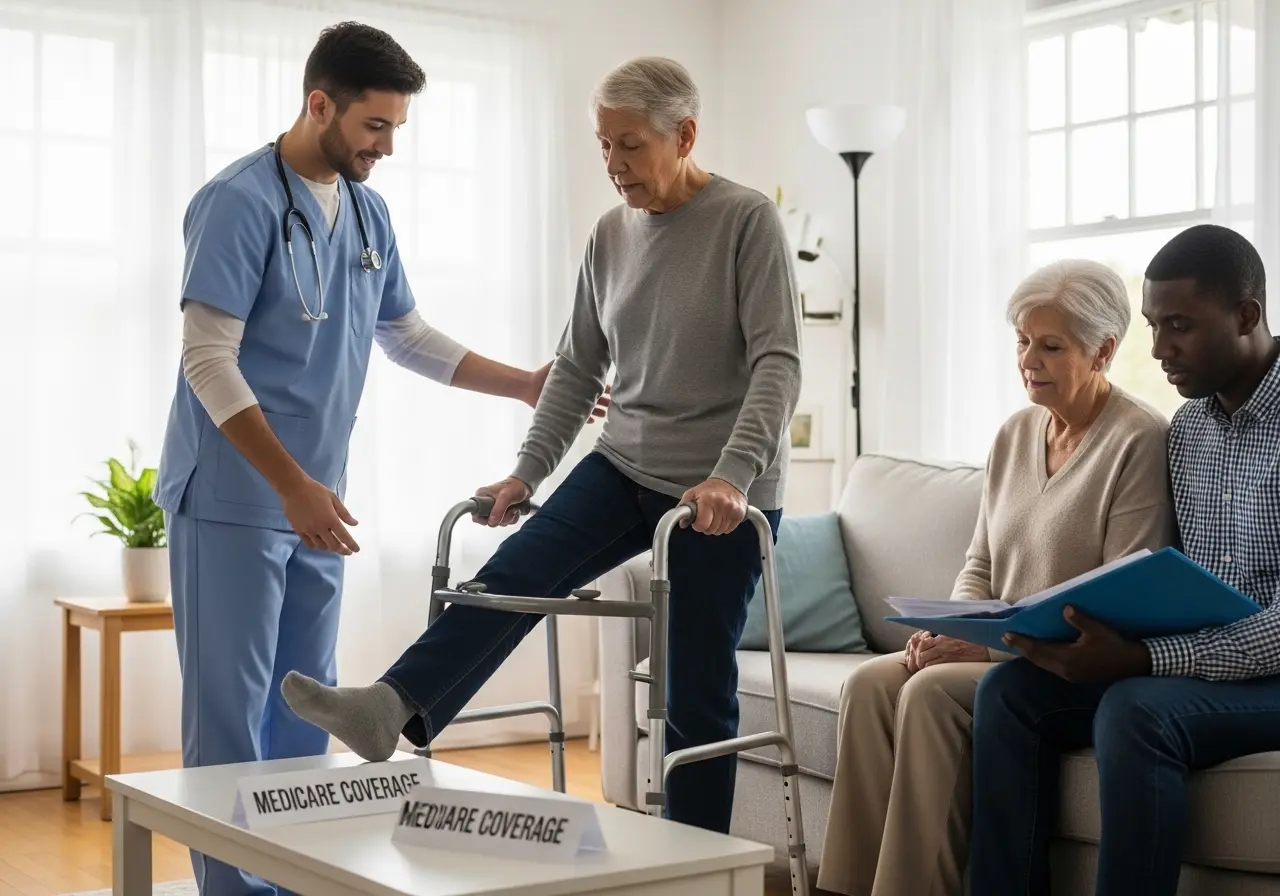
Helping someone walk safely again is one of the core skills of physical therapy. This includes working with assistive devices like walkers and canes, practicing on stairs, navigating transitions between surfaces, and building the endurance to move through a home without getting fatigued. The home environment is ideal for this because the patient is practicing on their actual floor, their actual stairs, their actual front door threshold.
Balance and Fall Prevention
This is probably the area where home therapy has the clearest advantage over clinic based care. Therapists work directly with the patient’s real environment, identifying hazards and building the specific balance skills needed to navigate that space safely.
Pain Management
Manual therapy, soft tissue work, therapeutic heat and cold, and electrical stimulation are all within a home PT’s toolbox. Many patients achieve meaningful pain reduction through therapy alone, which can reduce or eliminate the need for additional medication.
Recovery After Surgery
Post surgical rehabilitation is one of the most common reasons patients receive home therapy. Whether it is a hip replacement, knee replacement, spinal procedure, or cardiac surgery, getting rehabilitation started quickly in the home environment is associated with better functional outcomes.
Physical Therapy Exercises Patients May Do at Home
A good home therapy program does not only happen during the scheduled visits. The therapist teaches the patient a set of physical therapy exercises at home that become part of a daily routine between sessions. Consistent follow through with these exercises is probably the single biggest factor in how quickly patients recover.
Stretching and Flexibility Work
Stiffness is a common complaint after surgery and with many chronic conditions. Gentle stretching routines target the specific areas being treated. Calf stretches and heel cord flexibility work for patients with ankle issues. Hip flexor and piriformis stretches for lower back patients. Shoulder pendulum and cross body stretches for rotator cuff and shoulder problems. These are typically done once or twice daily and take only 10 to 15 minutes.
Strengthening Exercises
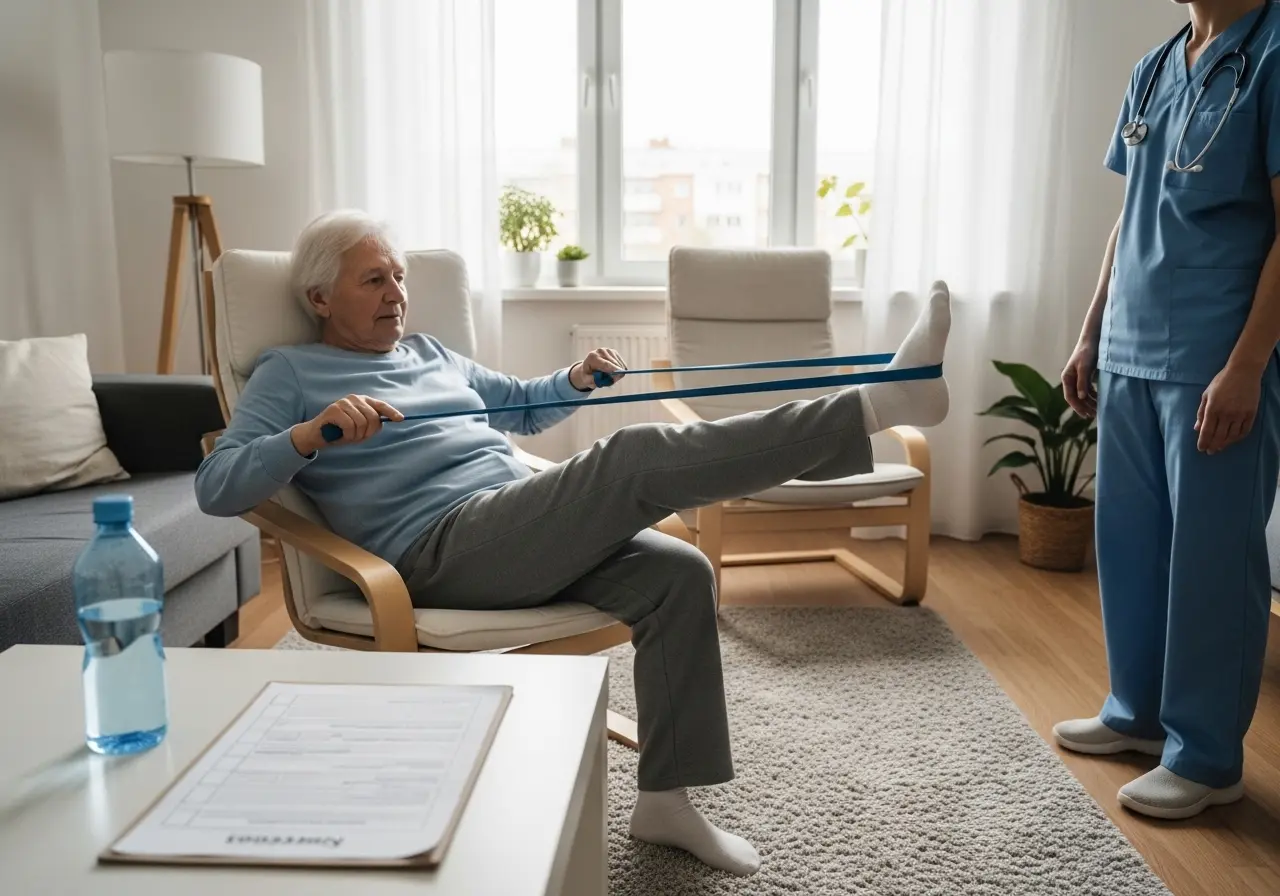
The strengthening program is usually the core of what patients do at home. For older adults, this typically focuses on the legs, glutes, and core. Seated leg extensions, standing heel raises holding a counter for balance, clamshells for hip stability, and resistance band exercises for the lower extremities are all common. The exercises start simple and get progressively more challenging as strength improves.
Balance Practice
Daily balance work makes a real difference over time. Standing on one foot near a counter, walking heel to toe along a line on the floor, and practicing controlled weight shifts from side to side are all exercises patients can do safely at home with proper setup. The therapist makes sure the patient can do these independently before assigning them as home work.
Functional Practice
Sometimes the most important thing a patient can practice is a specific real life movement. Getting in and out of a chair correctly. Climbing the three steps to the front door. Bending down to pick something up off the floor without losing balance. Practicing these actual tasks, in the actual home, is something clinic based therapy simply cannot replicate.
When patients complete their physical therapy exercises at home consistently, the progress between visits is measurable. Patients who do the home program recover faster. That is not a generalization, it is something I see directly in the outcomes of patients I follow.
How Insurance May Help Cover Therapy Costs
This is the question families are most anxious about, and the answer is genuinely more encouraging than most people expect.
Medicare
For adults 65 and older, Medicare is the starting point. Medicare does cover home physical therapy, but there are specific conditions that have to be met. The patient must be considered homebound, which means that leaving home requires a considerable and taxing effort due to their medical condition. A physician has to order the care. And the services must be delivered by a Medicare certified home health agency.
When those boxes are checked, Medicare Part A covers skilled home health services with no per-visit copay. That includes physical therapy, occupational therapy, speech therapy, skilled nursing, and medical social work. It is one of the more generous benefits in the Medicare program, and a lot of families do not realize they qualify until someone explains it to them.
Medicare Advantage plans, the private insurance alternative to original Medicare, vary more widely. Some offer strong home health benefits. Others have more restrictions. Reviewing your specific plan details matters here.
Private Insurance
Commercial plans generally cover home physical therapy, but the details differ a lot. Some require a physician referral before coverage kicks in. Some cap the number of covered visits per year. Some require prior authorization. The most important thing you can do before starting home therapy is call your insurance company, confirm your benefits, and ask specifically about home health physical therapy coverage, not just outpatient PT.
Medicaid
Medicaid coverage for home therapy varies by state. In Illinois, Medicaid does cover home health services for qualifying patients, but the rules around eligibility, covered services, and approved providers are specific. A hospital social worker or care coordinator can walk you through what is available based on your situation.
Medigap and Supplemental Plans
Medicare supplement plans can fill gaps in original Medicare coverage, potentially helping with deductibles, coinsurance, and costs that fall outside standard coverage. If your parent has a Medigap policy, it is worth reviewing what it covers in the context of home health services.
Paying Out of Pocket
For patients without coverage, options still exist. Many agencies offer reduced rates for self pay patients. Some independent therapists are open to negotiating, especially for ongoing cases or patients who can prepay for a set number of sessions. It is always worth having a direct conversation about cost rather than assuming the posted rate is fixed.
Availability of Home Therapy Services in Illinois
The Chicago suburbs and surrounding communities in Illinois have reasonably developed home health infrastructure, though how quickly you can access services, and which providers are available, varies from one town to another.
For families looking into home health care in Lockport IL, the good news is that Will County has multiple home health agencies operating throughout the area. Patients coming home from Silver Cross Hospital or other regional facilities in that corridor often already have agency referrals in place before discharge. If you are arranging care on your own, independent outreach to agencies serving the southwestern suburbs is usually the next step.
In Romeoville, elderly care services Romeoville IL are accessible through both larger regional agencies and some smaller practices. Romeoville’s location along the I 55 corridor puts it within range of providers based in Joliet, Bolingbrook, and Naperville. Post discharge coordination through a hospital case manager often gets the process moving faster than searching independently.
Families researching senior home care Palisades Illinois may find that smaller communities in that area draw from a broader regional pool of therapists rather than having dedicated local providers. This is common in less densely populated parts of the suburbs. Wait times for an initial evaluation can sometimes run a few days longer, but care is generally accessible.
The Naperville area has some of the strongest home health infrastructure in the region. Home Health care in Naperville is supported by numerous agencies, independent contractors, and specialty rehabilitation providers given the size of the community and the density of hospital systems in the area. Families there typically have more options to compare, which also means more ability to find someone who is a good fit.
For Lemont residents, senior home care in Lemont IL generally comes through agencies covering the broader DuPage and Cook County areas. Lemont’s location makes it accessible for therapists based in multiple surrounding communities, and families there tend to report relatively smooth access to care.
One note that applies everywhere: agency capacity fluctuates. A provider that has immediate openings this month might have a two week waitlist next month. Always call directly, confirm current availability, and ask specifically whether the therapist will be the same person for each visit rather than rotating staff.
How to Find In-Home Physical Therapy Services Near You
The process does not have to be overwhelming. Here is how I typically walk families through it.
Use Your Discharge Planner First
If your loved one is transitioning home from a hospital or inpatient rehab facility, the discharge planner or social worker is your best starting point. They know which agencies in the area are Medicare certified, which ones have good reputations, and which ones have current availability. A referral from a discharge planner also tends to move faster than an independent request.
Search With Specific Terms
When doing your own research, being specific helps. Searching for in home physical therapy services near me will give you a starting point. Adding your zip code or city narrows it down. Phrases like in home physical therapy services near me within 5 mi or in home physical therapy services near me open now can surface providers who are actively seeing new patients in your area. Read reviews, check how long the agency has been operating, and look for any complaints with the Better Business Bureau or state licensing boards.
Use Medicare’s Home Health Compare Tool
If your parent is on Medicare, the Home Health Compare tool on Medicare.gov lets you search for certified agencies by zip code and compare their quality ratings side by side. It is not a perfect tool, but it gives you a useful baseline before you start making calls.
Verify Licensure
In Illinois, physical therapist licensure is managed by the Illinois Department of Financial and Professional Regulation. You can look up any therapist’s license status online. This takes two minutes and tells you whether the person who shows up at your door is actually licensed to practice.
Ask the Right Questions Before Committing
Before scheduling an evaluation, ask whether the agency is in network with your insurance. Ask whether they are accepting new patients. Ask whether the same therapist will handle each visit or whether you should expect rotating staff. Ask for a rough estimate of how many visits are typical for your loved one’s diagnosis. These questions will tell you a lot about how the agency operates.
Questions Families Often Ask
How much does in-home physical therapy cost without insurance?
Without insurance, most patients pay between $150 and $350 per visit, with the majority of standard one hour sessions falling around $200 to $250. Specialized care or therapists in high cost markets can run higher. Over a full course of treatment, total out of pocket costs typically land somewhere between $1,500 and $6,000 depending on the number of visits required.
Is home therapy more expensive than going to a clinic?
Per visit, yes, usually somewhat more. You are paying for the therapist’s travel time and for completely individualized one on one attention for the entire session. Clinic visits often involve some degree of shared therapist time across multiple patients. That said, home therapy eliminates transportation costs, reduces the burden on caregivers, and removes the fatigue factor that can undermine clinic based sessions for older or more fragile patients. For many families, it is the better value even when the per visit rate is higher.
Does Medicare cover home physical therapy?
Yes, under the right conditions. The patient must be homebound, a physician must order the care, and the services must be provided by a Medicare certified home health agency. When those criteria are met, Medicare Part A covers skilled home health services including physical therapy with no per visit copay. Not every patient automatically qualifies, so confirming eligibility before starting is important.
How long does a home physical therapy session last?
Follow-up visits are usually 45 to 60 minutes. The initial evaluation visit typically runs longer, often 60 to 90 minutes, because the therapist needs time to complete a thorough assessment and build the treatment plan before any hands on work begins.
Is physical therapy at home effective for seniors?
For the right patient, it absolutely is. Research on in home physical therapy for seniors consistently shows outcomes comparable to clinic based care for post surgical recovery, fall prevention, and management of chronic mobility conditions. For patients who have difficulty traveling, the home setting often produces better adherence and better results precisely because the therapy happens where the patient actually lives and functions.
How do I find in home physical therapy services near you that accept my insurance?
Call your insurance company and ask for a list of in network home health agencies in your zip code. You can also ask your physician for a referral, use Medicare’s Home Health Compare tool if applicable, or call agencies directly and ask upfront whether they participate with your plan. Always confirm insurance before the first visit rather than assuming coverage.
How soon after surgery can home therapy begin?
Often within 24 to 48 hours of coming home from the hospital. For Medicare patients, the home health agency is frequently contacted before discharge and has an evaluation scheduled to happen quickly after the patient arrives home. Starting therapy early is associated with better outcomes, so there is rarely a reason to wait once the patient is medically stable and back home.
Conclusion
When families come to me with questions about the cost of home therapy, what they are really asking is whether this is going to be worth it and whether they can afford it. Those are the right questions.
The cost of in home physical therapy services near you will depend on where you live, what your loved one needs, how many visits are required, and what your insurance covers. A typical session runs $150 to $350, and insurance, particularly Medicare, can cover a significant portion of that for patients who qualify. Out of pocket options exist for those without coverage, and most agencies are willing to have a direct conversation about costs if you ask.
What I want families to take away from this is straightforward. Home therapy is not a luxury. For many patients, it is genuinely the most practical and effective path to recovery. The combination of clinical skill, individualized attention, and real world functional training in the patient’s own home produces outcomes that matter. And for older adults who have difficulty traveling, it removes a barrier that would otherwise stand between them and getting better.
If you are trying to figure out next steps for a parent or loved one, start with your physician or the hospital discharge team. They can connect you with qualified providers, confirm what your insurance covers, and help you understand what a realistic recovery timeline looks like.
You do not have to navigate this alone, and a good home physical therapist will make sure you do not have to. Read more