Introduction
Every week, I talk to families who are trying to figure out the same thing. Mom just got home from the hospital after a hip replacement. Dad had a minor stroke and needs rehabilitation. And the first real question, once the dust settles, is usually something like: Will insurance actually pay for someone to come to the house?
It is a completely reasonable question, and the confusion around it is understandable. Medicare has specific rules about home health coverage that are not always explained well at discharge. Sometimes families assume it is covered and are surprised when it is not. Other times, people assume it is not covered at all and never even ask, which means they end up missing out on a benefit they genuinely qualify for.
So let me be straightforward about this: Medicare does cover in home physical therapy in many situations. Not automatically, not for everyone, but it is far more accessible than most families realize.
For seniors in the Chicago southwest suburbs, traveling to a clinic three times a week for therapy is often just not realistic. Distance, transportation, the sheer physical effort of getting in and out of a car after surgery are real barriers. Families researching in-home physical therapy services in Lemont often find that bringing therapy to the patient is not just more convenient, it is actually the clinically smarter choice during early recovery. Medicare was designed with exactly these situations in mind.
This article walks through how the coverage works, what is required to qualify, and what families should know before they make any decisions.
What Is In-Home Physical Therapy?
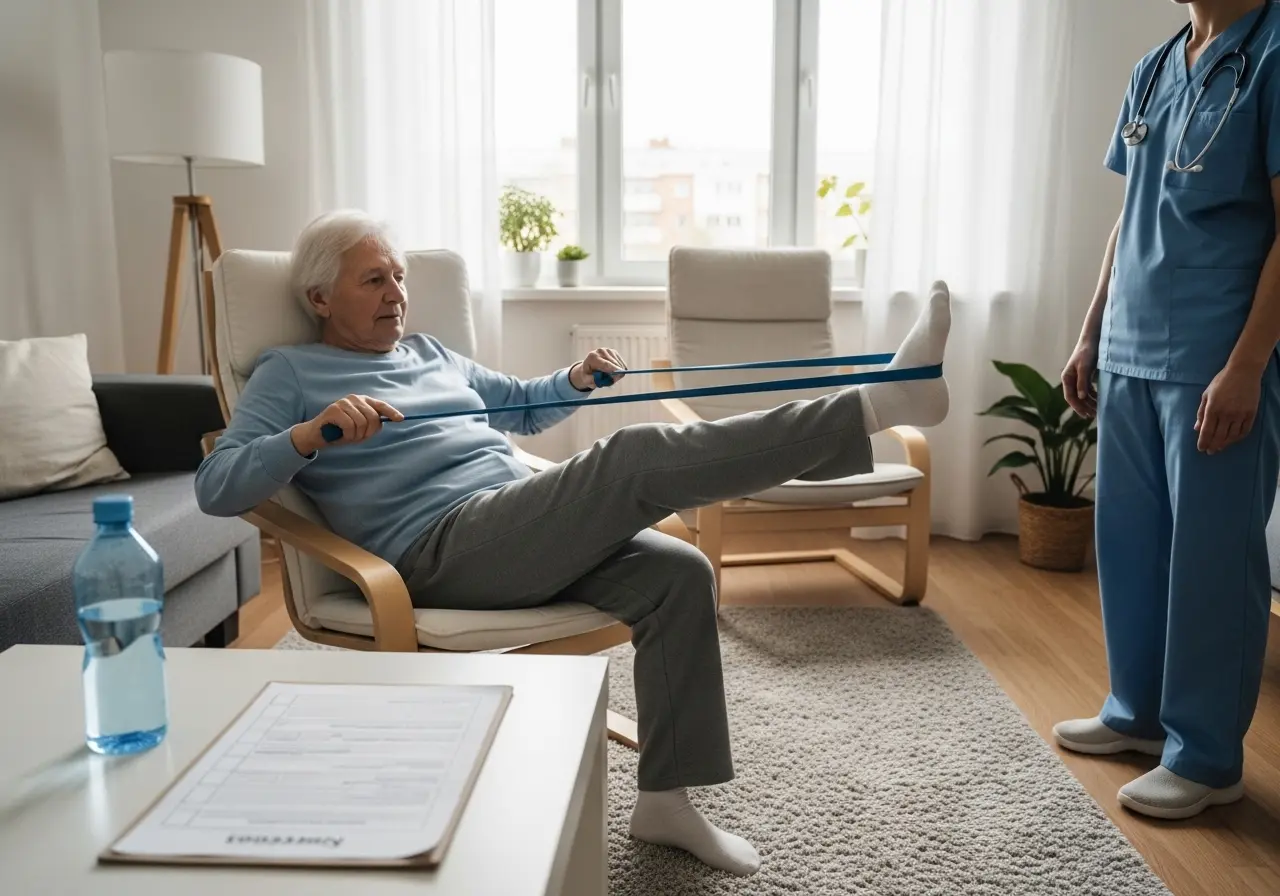
A physical therapist comes to the patient’s home and provides rehabilitation there. That is the simple version. The fuller picture is that a skilled therapist can do nearly everything in a home setting that they would do in a clinic, evaluate movement and function, design a personalized treatment plan, provide hands on therapy, track progress, and adjust the approach as the patient changes.
Sessions usually happen in the living room, the bedroom, or wherever is most practical. The therapist might spend part of the visit working on exercises, and part walking through the home, looking at stairs, floor surfaces, bathroom layout, anything that could affect safety or recovery.
In most cases you will see either a licensed physical therapist (PT) or a physical therapy assistant (PTA) who works under PT supervision. Both are trained and licensed. Both can deliver meaningful, effective therapy. The difference is mainly in the level of independent clinical decision making, though for day to day therapy sessions most patients will not notice a significant difference in quality.
Physical therapy at home services in the USA have expanded considerably over the past decade, and not just because of the pandemic. The research has kept pace with the growth, and the evidence generally supports what home health therapists have always known: patients who receive therapy in their actual living environment often transfer those skills more effectively to daily life than patients who practice in a clinic. There is something fundamentally different about learning to get up off your own couch, in your own living room, with your own furniture nearby.
When Seniors Need Physical Therapy at Home
Home therapy is not the right fit for everyone, and I want to be honest about that. But there are specific situations where it is genuinely the best option sometimes the only safe option.
Surgery Recovery
Joint replacements and major surgeries leave patients weak, in pain, and limited in what they can do safely. In the first weeks after discharge, the idea of getting dressed, getting into a car, riding to a clinic, and then sitting in a waiting room is exhausting just to think about. For many patients it is also risky. Home therapy in this window allows recovery to start safely, without adding unnecessary physical stress on top of what the body is already managing.
Stroke Rehabilitation
Stroke recovery is a long road, and the environment where therapy happens matters more than most people realize. When a therapist works with a stroke patient at home, they can address the actual challenges that patient faces, their specific hallways, their specific bathroom, their specific furniture layout. That context changes the therapy in meaningful ways.
Mobility Problems and Fall Risk
Balance problems, Parkinson’s disease, generalized weakness from prolonged illness these are all situations where getting to a clinic is itself a significant fall risk. A therapist coming to the home can address those mobility issues directly, and can also evaluate the home environment for hazards that a clinical setting simply cannot replicate.
Recovery After a Fall
A fall serious enough to cause a fracture or injury often shakes a person’s confidence as much as their body. In home physical therapy for seniors recovering from falls addresses both the physical rehabilitation and the fear of falling again. Therapists can identify what contributed to the fall in the first place and work to fix it, whether that is strength, balance, footwear, lighting, or a throw rug that needs to go.
Chronic and Neurological Conditions
Patients with MS, COPD, congestive heart failure, or severe arthritis often have good days and bad days. On bad days, a clinic visit is simply not happening. Consistent home based therapy accommodates that reality in a way that an outpatient schedule often cannot.
Will Medicare Pay for In-Home Physical Therapy?
Yes with conditions. Let me break it down by Medicare part, because they work differently.
Medicare Part A
Part A covers hospital stays, skilled nursing facilities, hospice, and home health care. If a patient has had a qualifying hospital stay of at least three days, Part A can cover home health services during the recovery period that follows. This includes physical therapy, occupational therapy, and skilled nursing visits. There is generally no copayment for the home health benefit itself under Part A, which surprises a lot of families.
Medicare Part B
Part B is where home therapy coverage gets a bit less well known. Part B covers outpatient services, but it also covers home based physical therapy when it is provided through a Medicare certified home health agency and the patient meets the homebound criteria. This is significant because it means a patient does not necessarily need a recent hospital stay to qualify. A senior with a chronic condition or significant mobility limitations may be eligible for covered home therapy through Part B even without any hospitalization.
For in-home health care insurance purposes, Medicare is the primary payer for most Americans 65 and older. If someone also carries a Medicare Advantage plan or a Medigap supplemental policy, those plans layer on top and may reduce out of pocket costs further. The rules and coverage amounts vary by plan, so it is always worth calling the plan directly to confirm.
For families looking at in-home physical therapy services in Lemont specifically, the coverage structure is the same as it is anywhere else in Illinois. What matters is finding a Medicare certified agency and confirming that the patient meets the eligibility criteria before services begin.
Medicare Requirements for Home Physical Therapy
This is where a lot of families get tripped up, so I want to go through each requirement clearly.
A Physician Must Order the Services
A doctor, nurse practitioner, or physician assistant must write the order for home health services and sign off on a plan of care. That plan needs to describe what services will be provided and why. It gets reviewed on a regular basis, typically every 60 days.
There is no way around this requirement. Without a signed physician order, Medicare will not pay, period. The process has to start with the patient’s doctor.
Medical Necessity
Medicare covers therapy that is medically necessary, meaning there has to be a documented clinical reason for it. The patient must have a condition or functional limitation that skilled therapy can realistically address. Progress needs to be documented along the way. Therapy prescribed simply to maintain a patient at their current level has historically been harder to get covered, though recent policy changes have improved this for certain patients. The therapist’s documentation is what Medicare reviewers look at, so thorough clinical notes matter a great deal.
Homebound Status
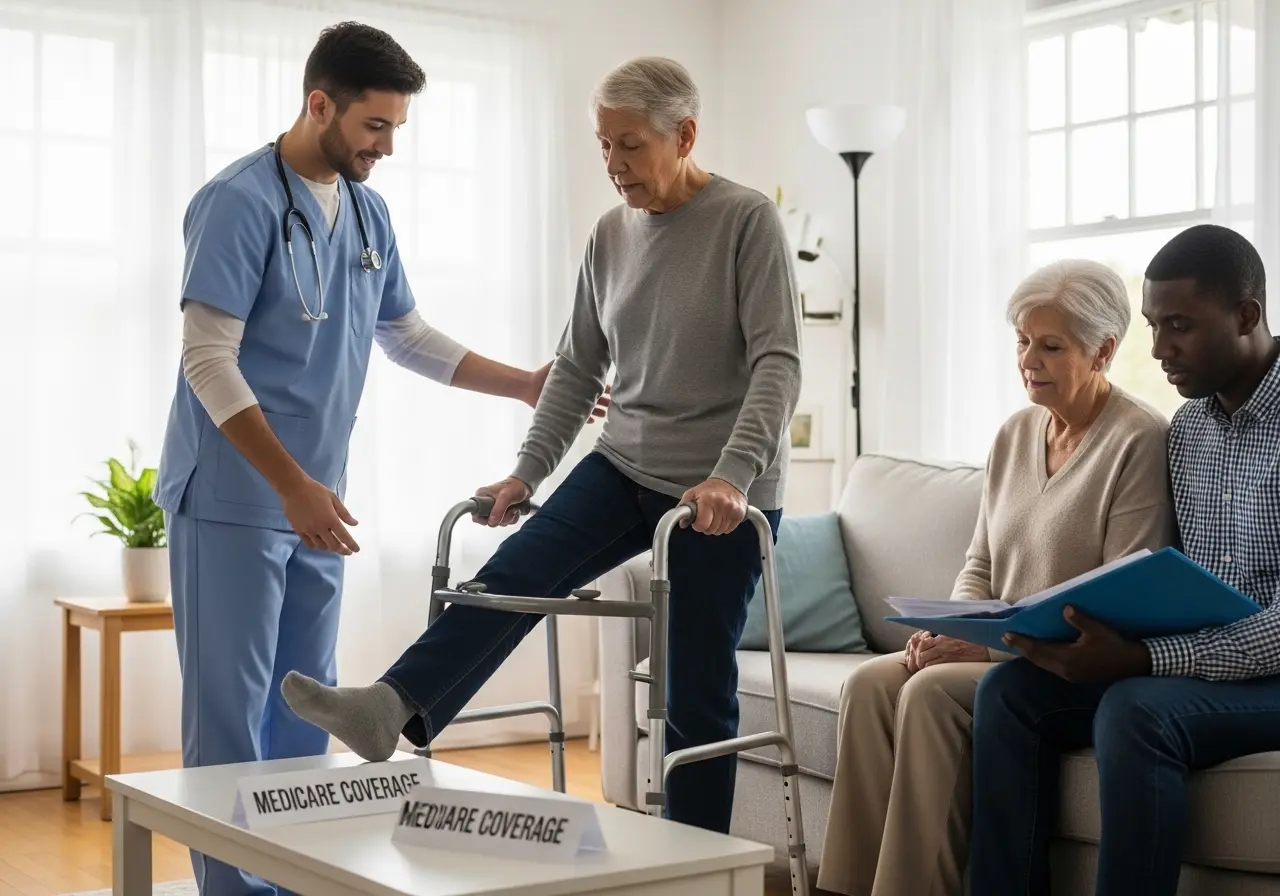
This one catches families off guard more than any other requirement. Medicare defines homebound in a specific way that does not mean completely housebound. It means that leaving home requires a considerable and taxing effort. A patient who needs a walker and another person’s help to get out the door, or who can only leave for doctor’s appointments, would typically qualify. A patient who drives themselves to the grocery store regularly would not.
If someone is already going to outpatient therapy without significant difficulty, Medicare is likely to view them as not homebound and deny home health coverage. This is a genuine limitation of the benefit, and it is worth understanding before assuming coverage applies.
Medicare Certified Home Health Agency
Not every home care company is Medicare certified. Certification means the agency has passed federal inspections and meets health and safety standards. Only certified agencies can bill Medicare for home health services. Before signing on with any provider, confirm their certification status. You can check at Medicare.gov or call 1to 800 MEDICARE directly.
What Services Medicare May Cover
When a patient qualifies, the home health benefit covers more than just physical therapy.
Physical Therapy
The core of what most families are looking for. A licensed therapist evaluates the patient, builds a treatment plan, and provides hands on sessions typically running 45 to 60 minutes. Goals might include improving strength, restoring range of motion, improving balance, or building functional skills like safely getting in and out of bed, climbing stairs, or walking to the mailbox.
Physical Therapy Assistant Services
Many home health agencies staff both PTs and PTAs. Physical therapy home health care provided by a PTA under PT supervision is covered by Medicare. The PT sets the plan and supervises; the PTA carries out many of the day to day treatment sessions. The physical therapy assistant home health care model is common and works well when the supervisory relationship is properly maintained.
Skilled Nursing
Home health visits from a registered nurse or licensed practical nurse can be included in the same plan of care. Wound care, medication management, IV therapy management, and monitoring of complex conditions are all examples of skilled nursing services that Medicare may cover alongside therapy.
Occupational Therapy and Speech Therapy
If the patient’s condition also affects daily activities, cognition, or swallowing, occupational therapy and speech language pathology services can be added to the home health plan. These are separate disciplines from physical therapy but fall under the same Medicare home health benefit.
Home Health Aide Visits
When skilled services are authorized, Medicare may cover limited home health aide visits for personal care assistance. These aides help with bathing, grooming, and dressing. They are not licensed to provide therapy or skilled nursing care on their own, and their visits are tied to the skilled care being provided.
Equipment Guidance
Therapists working in the home frequently recommend durable medical equipment like walkers, shower chairs, grab bars, or raised toilet seats. While Medicare Part B covers much of this equipment separately through a durable medical equipment supplier, the therapist’s training on how to use it safely is bundled into the therapy visit itself.
Benefits of Physical Therapy at Home for Seniors
I have worked in home health long enough to see firsthand why so many patients do well in this setting. It is not just convenient. There are real clinical reasons home therapy produces good outcomes.
The Environment Is Real
A clinic is a controlled, sterile environment. The floors are even, the lighting is ideal, obstacles are removed. Your parent’s home is not like that, and that is actually the point. When therapy happens at home, the patient practices on their actual surfaces, with their actual furniture layout, on their actual stairs. The transfer of skills from therapy to daily life is direct and immediate. Families searching for in home physical therapy services near me often discover this advantage once services begin, and it consistently surprises them how practical the sessions feel.
Less Physical Drain
Early recovery is exhausting. Asking a patient to get dressed, get into a car, sit in a waiting room, do an hour of therapy, and ride home again is a significant physical demand. Home care physical therapy removes all of that surrounding effort. The patient can put their full energy into the session itself.
One Therapist, One Patient
Outpatient clinics are often busy. Therapists manage multiple patients simultaneously, which is standard practice and generally fine for younger, healthier patients. Home therapy is one on one for the full visit. The therapist is entirely focused on your parents for that hour, which produces a level of individualized attention that is hard to match in a clinic.
Families Learn Too
When a family member is present during a home therapy session, they are not just watching. They are learning. The therapist can show a spouse or adult child how to safely assist with a transfer, how to spot a balance problem, how to cue a loved one through an exercise correctly. That kind of caregiver education has a real impact on outcomes and reduces the risk of injury between therapy visits.
Comfort Matters Clinically
This sounds soft, but it is not. Patients who feel safe and comfortable engage more actively with therapy. Anxiety and unfamiliar environments can dampen that engagement. Many patients recover faster when therapy happens in a familiar environment, and older adults especially tend to respond well to being treated in a space they know and trust.
Physical Therapy Exercises Seniors Can Do at Home
Between therapy visits, patients are almost always given a home exercise program. Physical therapy exercises at home are not optional extras. They are a core part of the treatment plan, and the patients who take them seriously tend to progress significantly faster than those who do not.
Strengthening Exercises
Leg strength is foundational to almost everything walking, balance, getting up from a chair, climbing stairs. Common exercises include chair stands (slowly rising from a seated position without using hands), heel raises, and hip extensions performed standing with counter support. Resistance bands are often introduced as strength improves.
Balance Work
Balance training gets more specific than most people expect. It is not just standing on one leg. It involves controlled weight shifts, narrow stance walking, heel to toe walking along a line, and activities that challenge the visual and vestibular systems together. Patients who commit to daily balance exercises typically see measurable improvement in fall risk within a few weeks.
Range of Motion and Stretching
Stiffness is one of the first things that develops after surgery or a period of reduced activity. Gentle stretching of the hip flexors, hamstrings, calves, and shoulders depending on what was affected helps maintain and restore joint mobility. These exercises are usually low intensity but need to be done consistently.
Walking Programs
Many therapists prescribe a structured walking program alongside in clinic exercises. Distance and pace are usually specific and progressive. Walking is one of the most effective and sustainable exercises for older adults, and having a concrete plan removes the guesswork.
When Seniors May Need Extra Home Care Support
Physical therapy addresses one piece of the recovery puzzle. But a patient who is homebound and recovering often needs help with other things that therapy does not cover getting dressed, preparing meals, remembering medications, having someone present in case of a fall.
Medicare’s home health benefit covers skilled services. It does not cover non medical daily assistance beyond limited home health aide visits. This gap is real, and families need to plan for it.
Home health care services in Lemont are available through a range of local agencies that can fill this gap. Non medical home care providers can be in the home several hours a day or more, providing hands on personal care, light housekeeping, meal preparation, companionship, and transportation to appointments.
For families exploring home care Lemont IL options, it helps to know that some agencies coordinate both the skilled and non skilled sides of care, making it easier to manage one relationship rather than two or three. Elderly home care Lemont IL services range from a few hours of weekly support to full daily coverage, depending on the patient’s level of need.
Senior home care in Lemont IL is accessible through local agencies, through referrals from hospital social workers or discharge planners, or through the Illinois Department on Aging, which can connect families with local resources. The level of care that makes sense depends on how much support family caregivers can realistically provide, the patient’s functional abilities, and the nature of the recovery.
Availability of Home Physical Therapy in Illinois Communities
Southwest suburban Chicago has reasonably good access to home physical therapy services. Most Medicare certified agencies in the region serve a broad geographic footprint, covering multiple communities from a central office.
Families looking at in home physical therapy services near Palisades IL will generally find that agencies serving Lemont or Orland Park also serve that area. It is always worth confirming service area before contacting a specific agency, because some smaller providers have tighter geographic limits.
For those researching in home physical therapy services near Lockport IL, the options are similar. Lockport falls within the service area of many southwest suburban home health providers, and the Medicare rules and coverage are the same throughout Illinois.
When evaluating any provider, whether it is top rated in home physical therapy services near me search results or a recommendation from a doctor’s office, the questions worth asking are consistent: Is the agency Medicare certified? What are therapist credentials and experience levels? How quickly can services begin? How does the agency communicate with the referring physician? A good agency will answer all of these without hesitation.
Questions Families Often Ask
Does Medicare cover physical therapy at home?
Yes, when four conditions are met: a physician orders the services, the patient is considered homebound, the services are medically necessary, and a Medicare certified agency provides the care. When all four apply, traditional Medicare covers the home health benefit with no copayment.
How many home therapy visits does Medicare allow?
There is no set visit limit. Medicare covers visits for as long as the patient is making progress, the services remain medically necessary, and the homebound and physician order requirements continue to be met. Coverage is reviewed regularly, typically every 60 days.
Do seniors need a doctor referral for home therapy?
Yes, always. A physician, nurse practitioner, or physician assistant must write the order and sign the plan of care. Without that, Medicare will not pay for home health services regardless of how clearly the patient needs them.
Is home physical therapy as effective as going to a clinic?
For most functional rehabilitation goals, yes. Research comparing outcomes in home health care and physical therapy versus outpatient settings generally shows comparable results, with some studies favoring home based care for older adults. The main advantages of a clinic are access to specialized equipment and the social environment. For most seniors recovering from surgery, stroke, or fall injuries, home therapy gets the job done.
How long does home rehabilitation usually last?
It depends on the condition. A straightforward knee or hip replacement recovery might wrap up in six to eight weeks. Stroke rehabilitation often extends much longer. The therapist and physician monitor progress and adjust the timeline accordingly. There is no standard answer that applies across the board.
Can I request in-home physical therapy services in Lemont specifically?
You can express a preference for agencies serving that area, and your parent’s physician or discharge planner can refer to a certified agency there. Availability depends on which agencies have coverage in that zip code and which have current capacity. It is worth asking the discharge planner for two or three options so you have choices.
What if my parents need daily help beyond what therapy provides?
This is one of the most common situations families face. Medicare does not cover ongoing personal care, cooking, or companionship outside of limited aid visits. Private pay home care, state programs through the Illinois Department on Aging, or long term care insurance are the typical ways to fill that gap. A social worker at the hospital or physician’s office can help identify what is available and what the patient may qualify for.
Conclusion
Medicare does pay for in-home physical therapy, and it pays for it well when the eligibility criteria are met. The homebound requirement is the one that trips up the most families, but many seniors recovering from surgery, stroke, or significant mobility problems genuinely qualify under that definition without realizing it.
For families in the southwest Chicago suburbs, in-home physical therapy services in Lemont and surrounding communities are accessible through multiple Medicare certified providers. Your starting point should always be the patient’s physician, who can confirm clinical eligibility, write the referral, and connect you with agencies they have worked with before.
Home based rehabilitation is not a consolation prize. For a lot of older adults, it is simply the best clinical choice. The therapists who specialize in home health are skilled at working in real environments with real patients who have real lives to get back to. That focus on practical, functional recovery is one of the things that makes home therapy so effective for the people who need it most.
Start with the doctor. Ask the questions. And do not assume Medicare will not cover it before you actually check. Read more