Introduction
Heart and circulatory diseases change daily life in quiet but serious ways. They affect how someone breathes, moves, sleeps, and feels. Many people with heart conditions do not need to stay in a hospital. They need steady care at home. They need help watching symptoms, taking medicine the right way, and staying safe during normal routines.
In Illinois, many families choose home care because it allows their loved one to stay in a familiar place. Home feels calmer. It feels less rushed. It gives space for healing without the stress of constant medical settings. Winter weather, long travel times, and busy clinics also make home based care more practical for many households.
Home health care for heart disease is not about replacing doctors. It is about supporting daily care between medical visits. It helps families feel less alone. It gives patients a sense of control during a time when their bodies may feel unpredictable.
This guide walks through what heart related home care looks like in real homes across Illinois. It focuses on safety, comfort, and understanding what support truly helps.
Understanding Heart and Circulatory Diseases at Home
Heart and circulatory diseases cover many conditions. Some develop slowly. Others appear suddenly. Families often hear medical terms that feel confusing or scary. Coronary artery disease happens when blood flow to the heart becomes limited. People may feel chest pressure, shortness of breath, or fatigue. At home, this can show up as someone needing more rest or avoiding stairs.
Congestive heart failure means the heart is not pumping as strongly as it should. Fluid can build up in the lungs or legs. Shoes may feel tight. Breathing may feel harder when lying down. Arrhythmias are irregular heartbeats. Some feel like fluttering or racing. Others cause dizziness or weakness. High blood pressure often has no clear symptoms. Yet it puts extra strain on the heart over time. Daily monitoring becomes important.
After a heart attack or surgery, the heart needs time to heal. Energy levels change. Emotions may shift. Fear of doing too much or too little is common. At home, these conditions affect daily choices. When to rest. When to move. How much salt to use. When to call for help. Clear guidance and steady support make these decisions easier.
Why Home Health Care Matters for Heart Patients
The heart works nonstop. When it struggles, small changes matter. Home care allows close attention to those small details.
Comfort is a big reason families choose home care. Familiar surroundings lower stress. Stress affects heart health. A calm home supports healing.
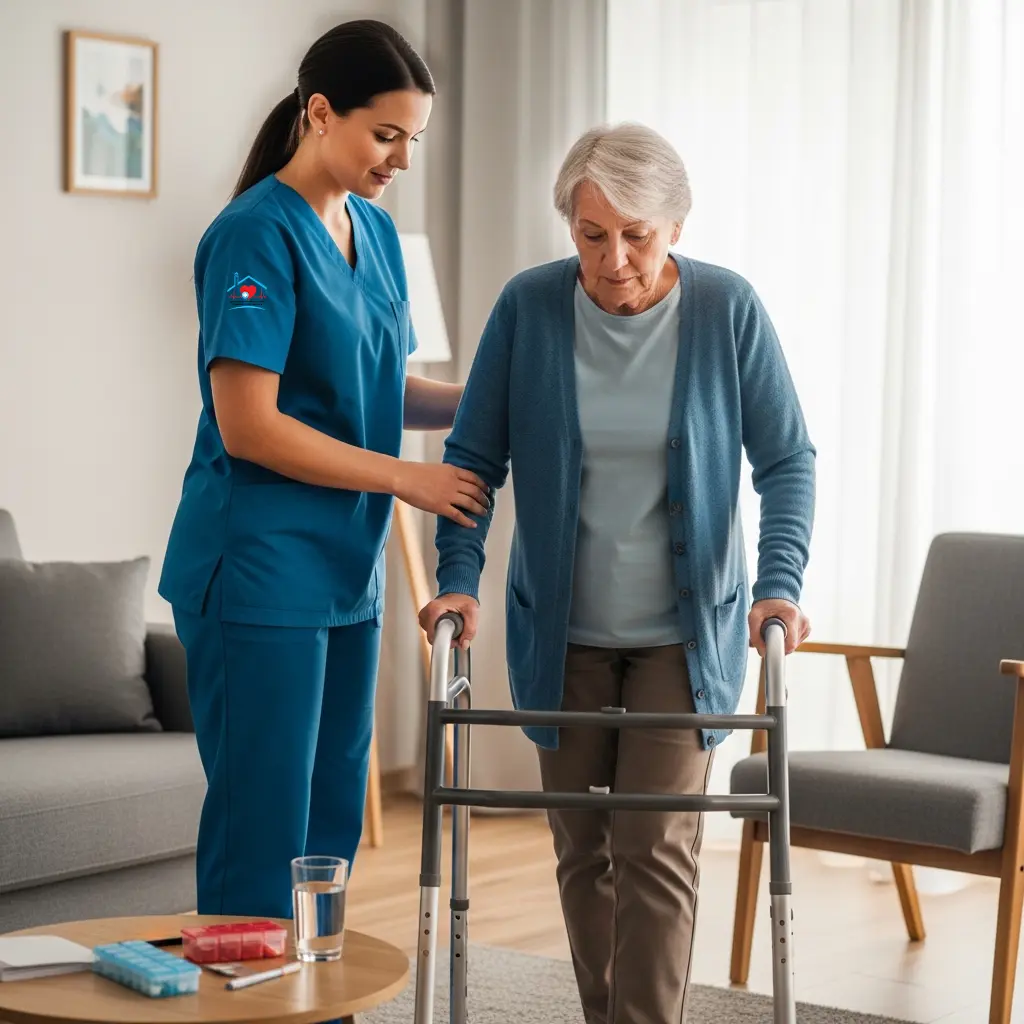
Safety is another reason. Heart patients can become dizzy or weak. Falls are a real concern. Having someone nearby who understands these risks makes daily life safer.
Monitoring is harder than it sounds. Weight changes, swelling, blood pressure, and breathing patterns can shift quickly. Home care professionals notice patterns early. Early changes often prevent hospital visits.
Emotional stability matters too. Heart disease can bring fear, frustration, or sadness. Being at home with consistent support helps patients feel heard and less overwhelmed.
Cardiovascular home health care is not about doing everything for someone. It is about helping them do what they can, safely and confidently.
Types of Heart Related Home Health Care Services
Heart care at home includes several kinds of support. Each one plays a different role.
- Nursing care focuses on medical needs. This includes checking vital signs, managing symptoms, and watching for warning signs.
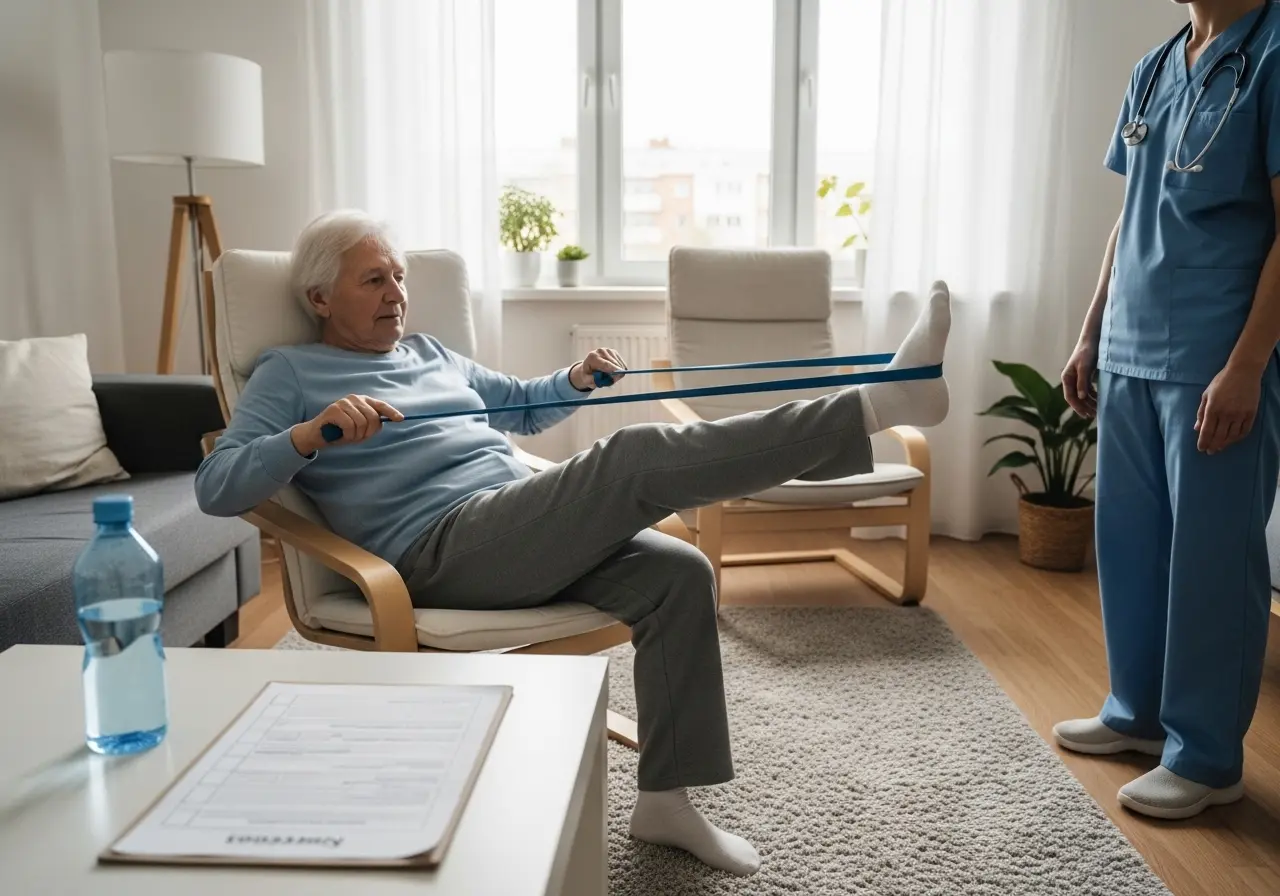
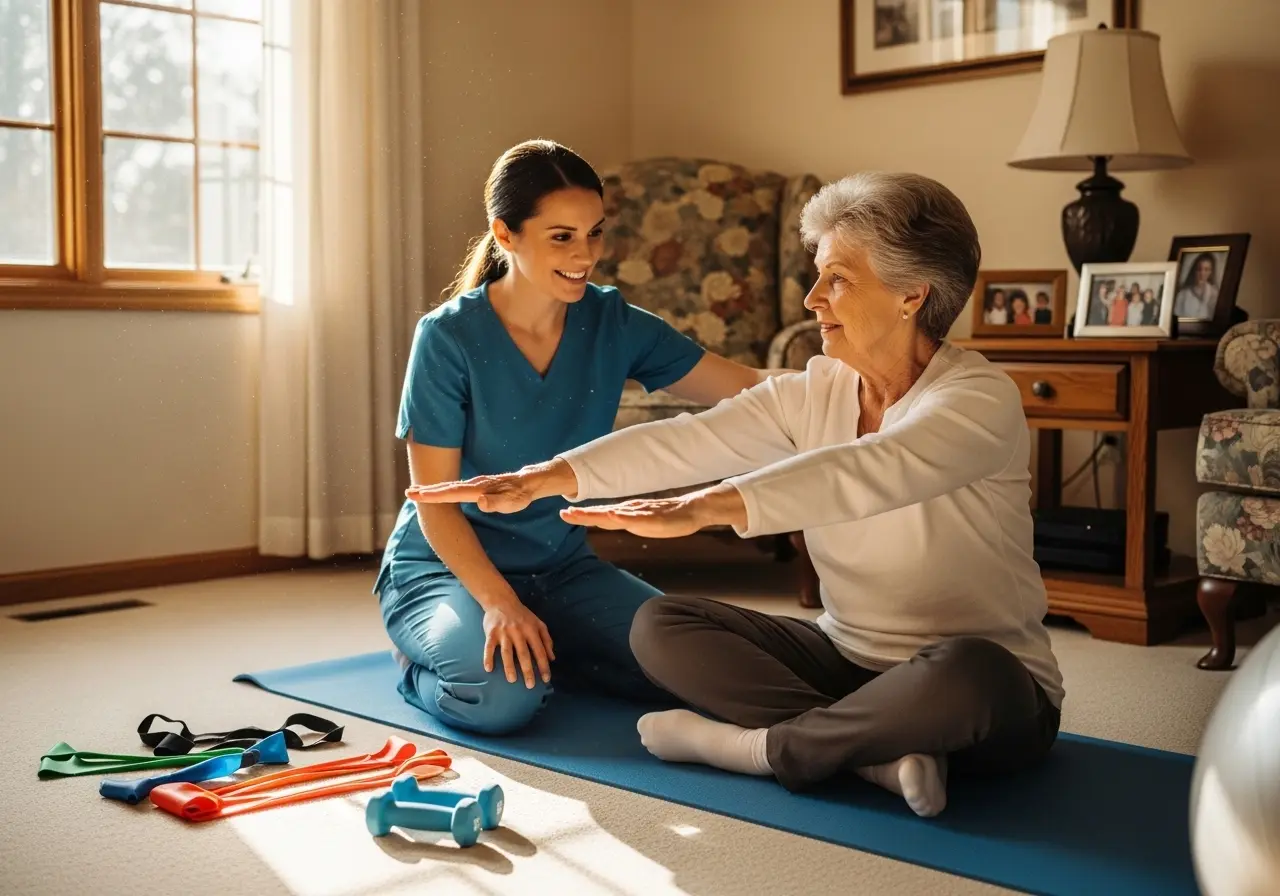
- Therapy services help with strength and movement. Physical therapists guide safe exercises. Occupational therapists help with daily tasks like bathing or cooking.
- Home health aides assist with personal care. They help with dressing, grooming, and light household tasks. This support reduces strain on the heart.
- Monitoring services track changes over time. Daily weights, blood pressure logs, and oxygen levels help guide care decisions.
- Education is part of every service. Families learn what to watch for. Patients learn how to pace themselves.
Cardiac home health care services adjust as needs change. Some people need short term help. Others need ongoing support.
Skilled Nursing Care for Heart Disease at Home
Skilled nursing care for heart disease at home brings medical knowledge into daily life. Nurses understand how heart conditions behave outside hospital walls.
They assess symptoms in real time. A nurse notices swelling in ankles. They ask about breathing at night. They check blood pressure trends, not just single numbers.
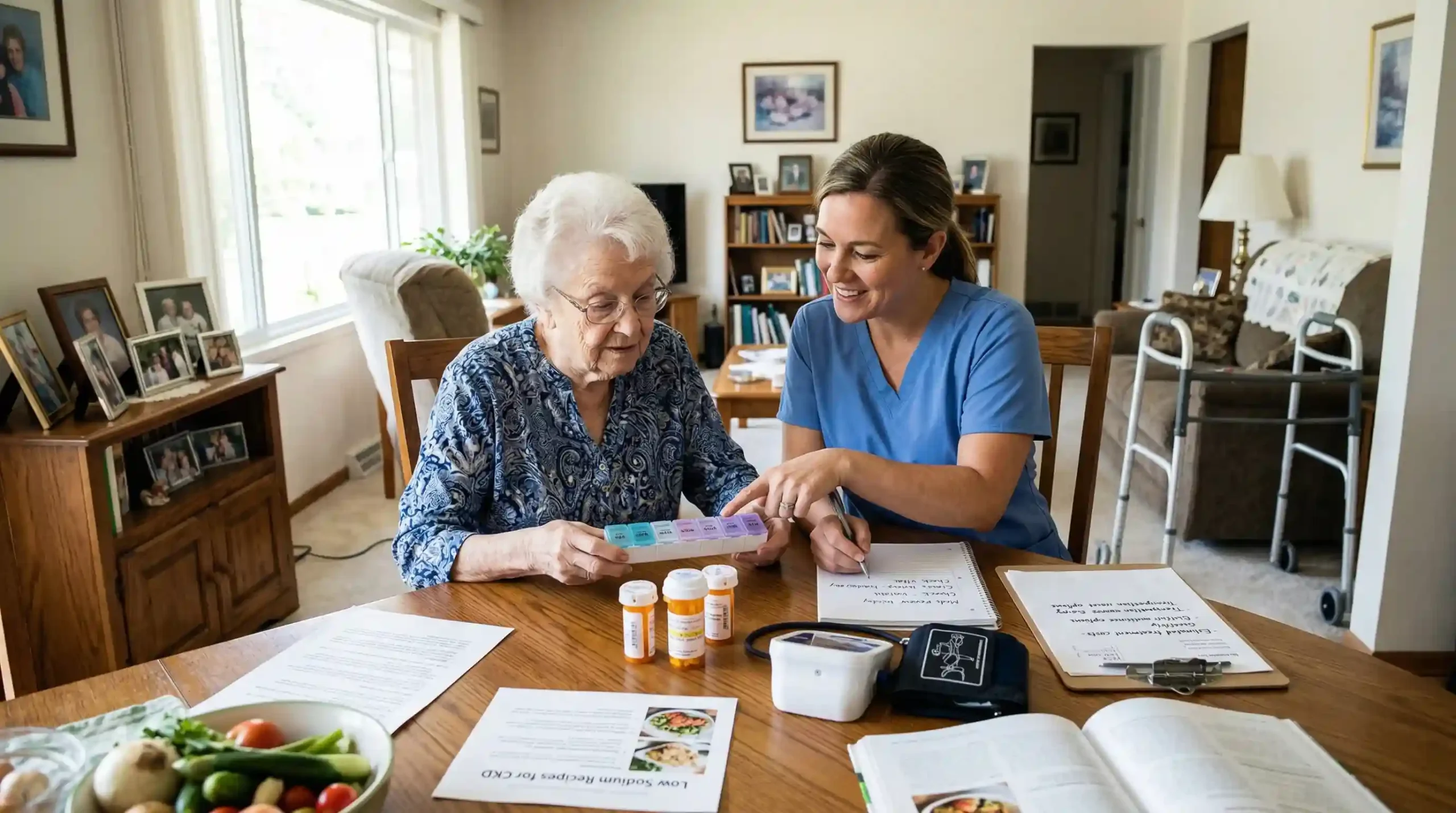
Medication management is a major role. Heart patients often take many medications. Some control rhythm. Others reduce fluid or lower pressure. Nurses help prevent missed doses or dangerous combinations.
They also coordinate with doctors. If something changes, they report clear details. This helps doctors make better decisions without delay. Skilled nursing care also supports families. Caregivers learn what is normal and what is not. This reduces panic and guesswork.
Managing Congestive Heart Failure at Home
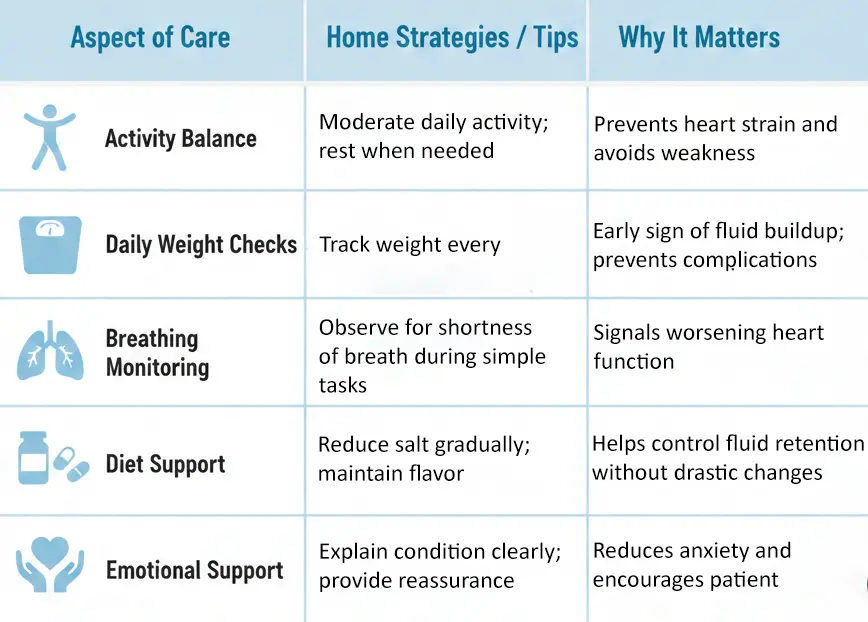
Heart failure care at home focuses on balance. Too much activity strains the heart. Too little leads to weakness. Home health care for congestive heart failure patients often includes daily weight checks. A small weight gain can mean fluid build up. Catching it early matters. Nurses watch breathing patterns. Shortness of breath during simple tasks can signal trouble. Diet support is practical, not strict. Families learn how to reduce salt without losing flavor. Small changes add up. Medication timing becomes routine. Diuretics, often called water pills, affect bathroom needs. Planning the day around them helps maintain comfort. Emotional reassurance is part of care. Heart failure sounds frightening. Clear explanations reduce fear and help patients stay engaged in their care.
Post Surgery Heart Care and Recovery Support
After heart surgery, the body needs patience. Healing happens slowly.
Post surgery heart care at home focuses on wound care, pain control, and gradual movement. Nurses check incision sites for signs of infection. They teach families what healing should look like. Energy levels vary day to day. Some mornings feel strong. Others feel tired. Home care adapts to these changes. Therapists guide safe exercises. These movements improve circulation without stressing the heart. Sleep can be difficult after surgery. Pillows, positioning, and routines make rest easier. Recovery at home allows people to heal at their own pace. Familiar routines reduce anxiety during this vulnerable time.
Medication, Monitoring, and Lifestyle Support
Heart care depends on consistency. Small habits protect the heart over time. Medication safety is critical. Pills may look alike. Schedules can be confusing. Nurses help organize medications and explain why each one matters. Vital sign monitoring becomes part of daily life. Blood pressure cuffs and scales are simple tools. Used correctly, they provide valuable insight. Lifestyle support focuses on realistic changes. Short walks instead of long ones. Sitting breaks during chores. Balanced meals that feel satisfying. Education happens through conversation. Caregivers learn to listen for changes in breathing or speech. Patients learn to trust their bodies again. Heart disease recovery care at home blends medical care with daily living. It fits into real homes, not perfect scenarios.
Elderly Heart Disease Care at Home
Aging changes how the heart responds to illness. Recovery takes longer. Symptoms may appear differently. Elderly heart disease care at home respects these differences. Care moves at a slower pace. Instructions are repeated gently. Memory issues can complicate medication routines. Home care professionals create simple systems that reduce errors. Mobility concerns increase fall risk. Nurses and aides help adjust the home environment for safety. Emotional needs also grow. Older adults may feel loss of independence. Compassionate care preserves dignity and choice. Family members often feel relief knowing their loved one is supported by experienced caregivers.
Managing Heart Disease at Home With Nursing Care
- Managing heart disease at home with nursing care means ongoing guidance. It is not a one time visit.
- Nurses build relationships over time. They notice subtle changes that others might miss.
- Care plans adjust as conditions change. A new medication. A recent hospitalization. A change in energy.
- Education continues. Patients learn to recognize early warning signs. Families gain confidence in daily decisions.
- This steady presence reduces emergency situations. It helps people stay comfortable and stable at home.
- Home care services for cardiovascular patients focus on prevention as much as response.
Choosing Home Care Services for Cardiovascular Patients
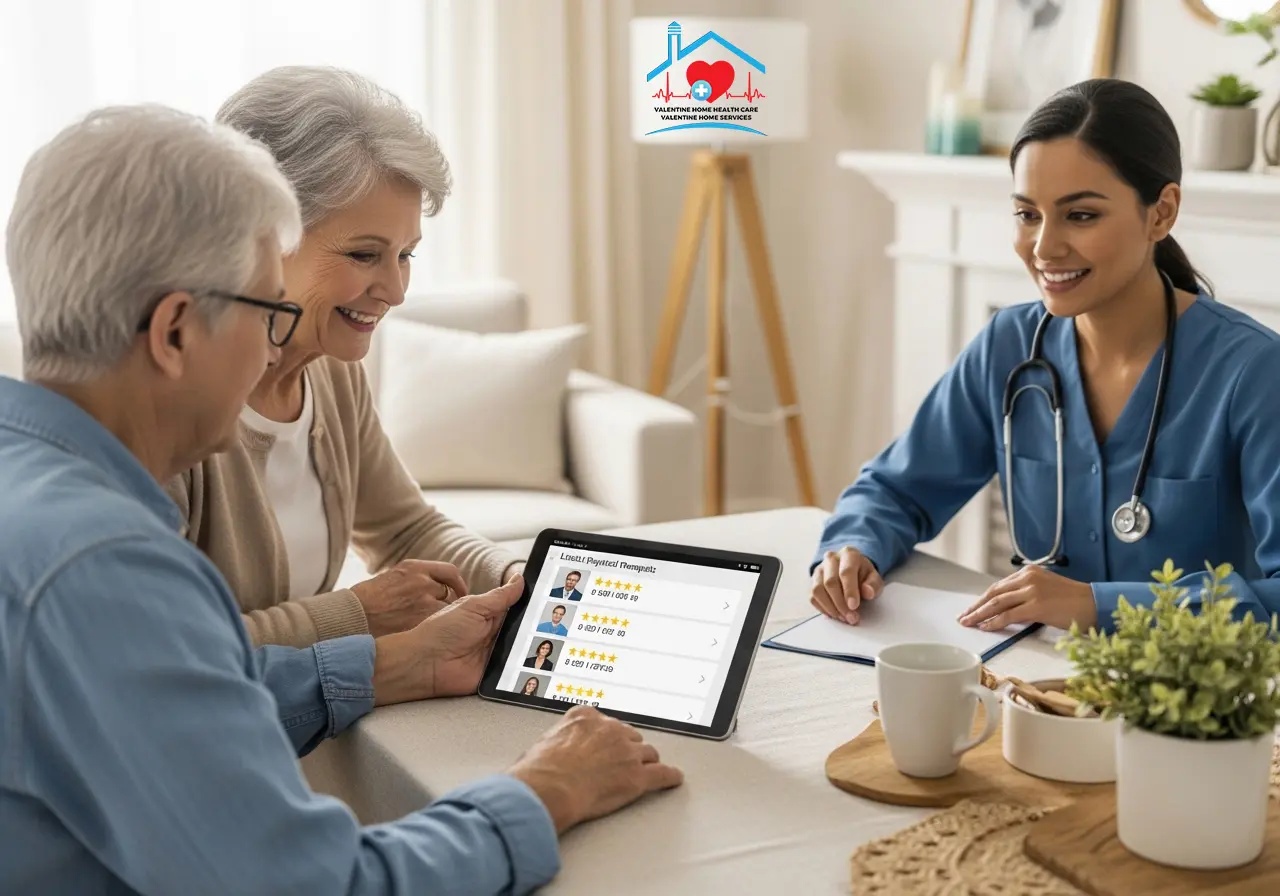
Choosing care feels overwhelming at first. Families want safety and reliability.
- Experience with heart conditions matters. Ask how caregivers monitor symptoms and communicate changes.
- Consistency of caregivers helps build trust. Familiar faces notice small shifts in health.
- Clear communication is essential. Families should understand who to call with concerns.
- Flexibility matters too. Heart conditions can change quickly. Services should adapt without disruption.
- Home care services for cardiovascular patients should fit the household, not the other way around.
Valentine Home Health Care
Valentine Home Health Care provides in-home nursing and support services for individuals managing chronic conditions, including heart and circulatory diseases. Their care teams focus on symptom monitoring, medication management, and patient education within the home setting. Services are delivered by licensed professionals who work with physicians and families to support recovery and ongoing health needs. Valentine Home Health Care operates as part of the broader network of home health care in Illinois, offering care designed to fit each patient’s daily routine and medical plan.
Questions Families Commonly Ask
How often will a nurse visit?
Visit schedules depend on medical needs. Some patients need several visits a week. Others need less frequent check-ins.
What signs should we watch for?
Sudden weight gain, increased shortness of breath, chest discomfort, dizziness, or swelling should be reported.
Can home care prevent hospital visits?
Early monitoring often catches problems before they become emergencies.
Is home care only for severe cases?
No. Many people benefit from short term support after diagnosis or surgery.
Will caregivers teach us what to do?
Yes. Education is a core part of heart related home care.
Conclusion
Heart and circulatory diseases affect more than the heart itself. They touch every part of daily life. Home based care brings medical support into familiar spaces where healing feels possible. For families in Illinois, in-home heart care offers comfort, safety, and steady guidance. It supports recovery, reduces stress, and helps people live with confidence despite ongoing health challenges. With the right support, home becomes a place of healing, understanding, and quiet strength. Read more