Introduction
For many families in Illinois, keeping a loved one at home as they age or deal with illness can feel overwhelming. Medical bills, caregiving responsibilities, and the daily needs of someone who requires support add up quickly. Most families want their loved ones to stay in familiar surroundings, but the cost of home health care can make that seem impossible.
That’s where home health care assistance programs come in. These programs are designed to help families cover the costs of in home care. They make it possible for seniors, people with chronic illnesses, or those recovering from surgery to get the care they need without leaving their homes. With the right support, families can find help with daily tasks, nursing care, therapy, and more.
Navigating these programs can feel confusing. Forms, eligibility rules, and service options often seem like a maze. But with a calm, step by step approach, it’s possible to understand what’s available and get the support your loved one needs. This guide is written to walk you through that process, offering practical advice from real experience helping families in Illinois access home care.
Understanding Home Health Care Assistance Programs in Illinois
Home health care assistance programs in Illinois are designed to help people stay at home while receiving the care they need. These programs aren’t just for seniors, they also help people with disabilities, chronic illnesses, or those recovering from surgery.
They provide funding or coverage for different types of care. Some programs cover nursing visits, while others help with personal care or therapy. There are also programs that offer more specialized support, like dementia care or palliative care.
These programs usually come through the state or local agencies, including the Illinois Department on Aging, Medicaid, and community based initiatives. Each program has rules about who qualifies, what services are covered, and how much assistance is provided. The key is to understand what fits your loved one’s situation and apply for the program that makes the most sense.
Who Qualifies for Home Health Care Assistance
Eligibility can feel complicated, but it often comes down to a few practical things: age, income, health condition, and level of need.
- Age and health status: Many programs prioritize seniors, usually 60 or older, or adults with significant medical needs. For example, my client Mrs. H., age 78, qualified because she needed help with bathing and medication management after a recent hospital stay.
- Income and financial need: Some programs have income limits. If your family’s income is modest, you may qualify for assistance even if your loved one has some savings. I often work with families who worry about making too much to qualify, but many assistance programs take expenses like rent, medical bills, and caregiving costs into account.
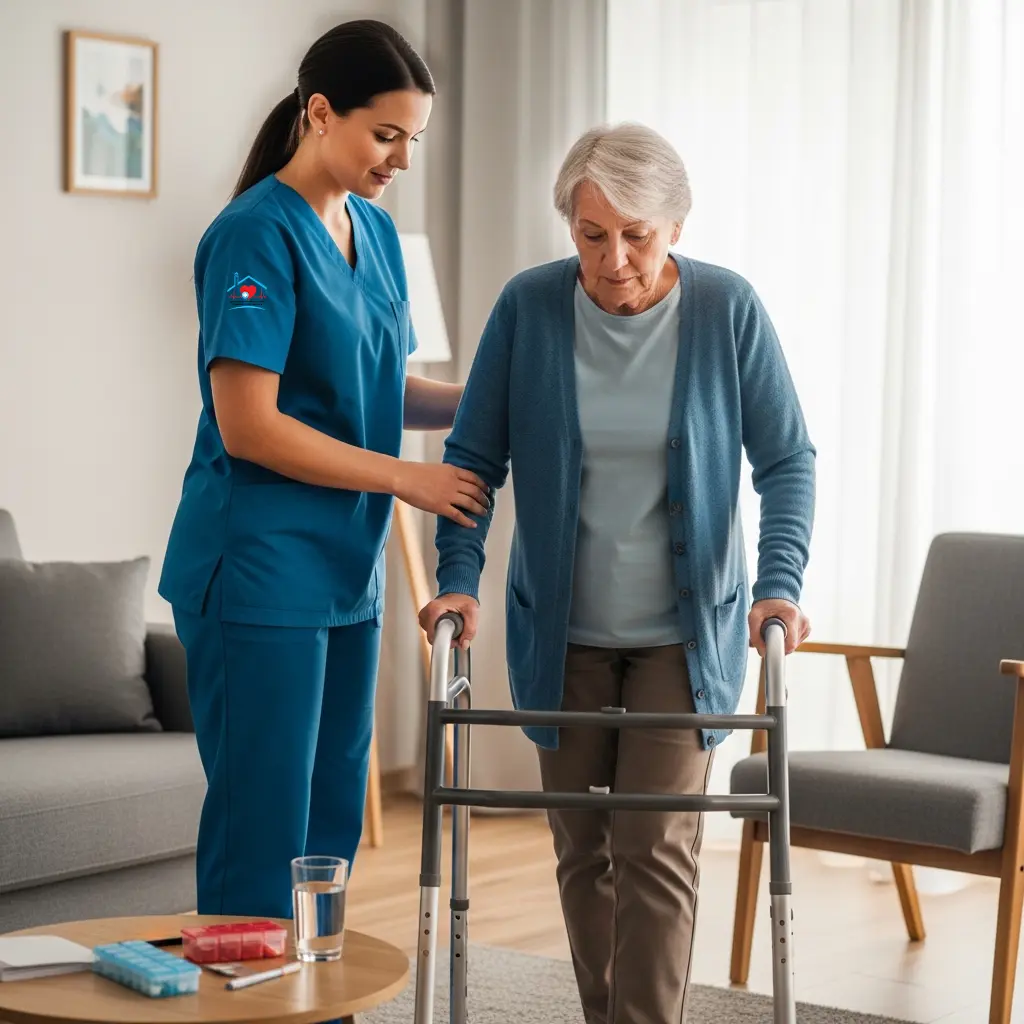
- Level of care needed: Programs look at how much help your loved one requires. Someone who needs daily living assistance for seniors help with eating, dressing, or mobility often qualifies for more support.
Every situation is different. Sometimes adult children don’t think their parents need help, until a nurse assessment shows they require daily supervision. It’s worth getting a professional evaluation because it often opens doors to programs families didn’t know existed.
Types of Home Health Care Services Covered
Home health care programs cover a range of services, often tailored to each family’s needs. Common types include:
- Nursing care: Visits from registered nurses or licensed practical nurses. They can monitor chronic conditions, administer medications, or provide wound care.
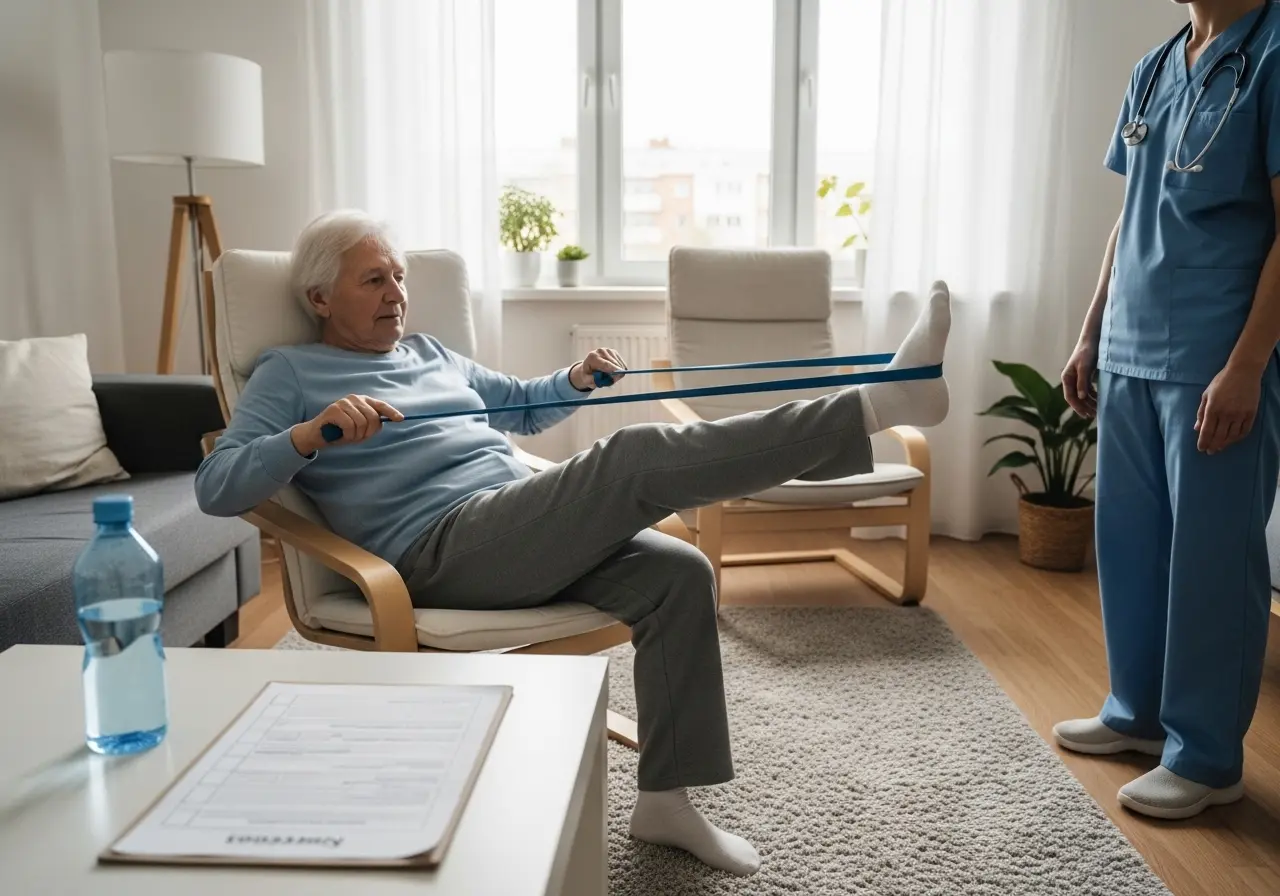
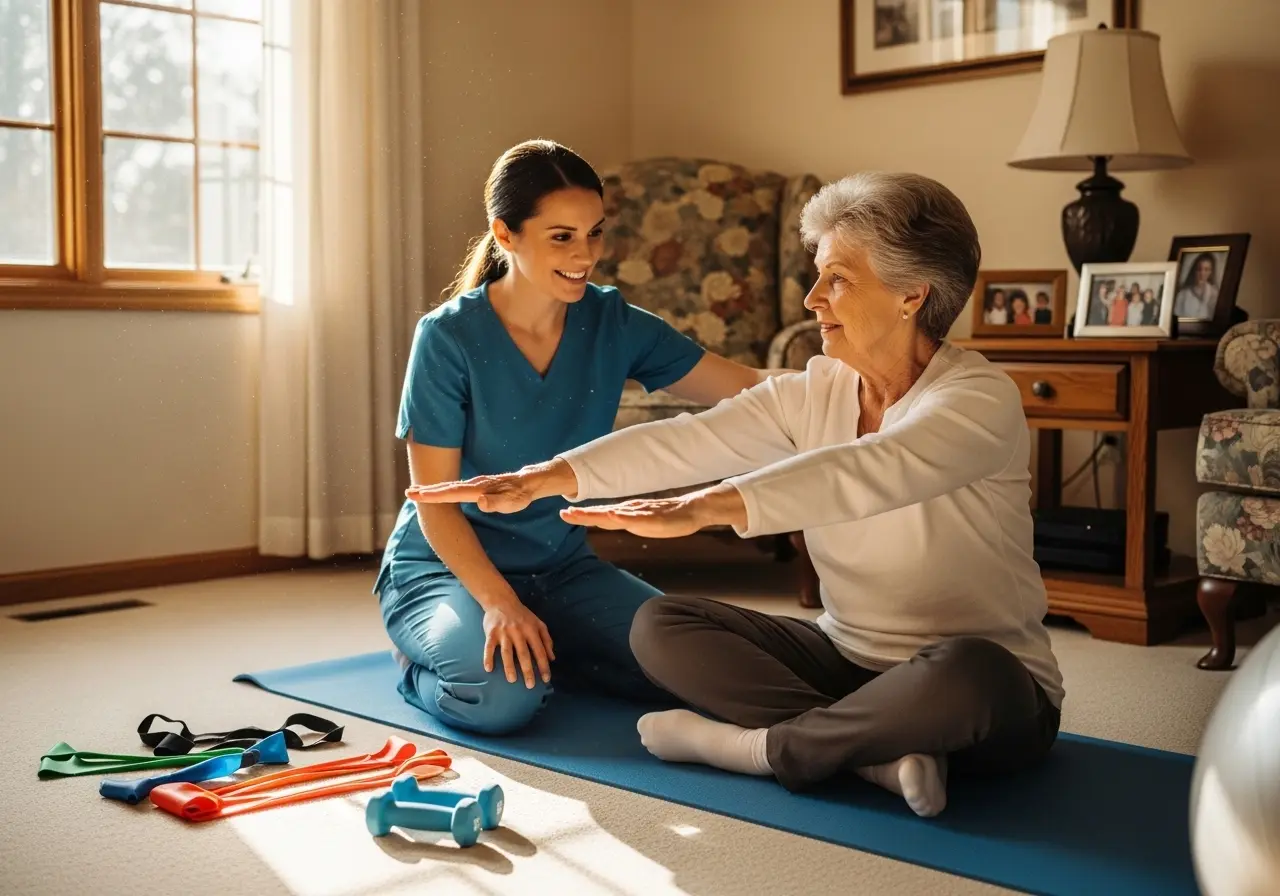
- Therapy services: Physical, occupational, or speech therapy provided at home. Physical therapy exercises for elderly at home can help improve balance, prevent falls, and maintain independence.
- Personal care: Assistance with bathing, dressing, grooming, and other daily tasks.
- Household support: Help with meals, light housekeeping, or errands, which lets seniors stay in their homes safely.
- Specialized programs: Dementia care, palliative care, or chronic illness support. These often come with additional assessments or training for caregivers.
Coverage varies by program, so it’s important to match your loved one’s needs with the right services.
Home Health Care Services in Southern Illinois
Families in southern Illinois face unique challenges when it comes to accessing home care. Rural areas often have fewer agencies nearby, which can mean longer travel times for nurses or caregivers. Some families need to work with multiple providers to cover all services.
That said, southern Illinois does have home health care services in southern Illinois that are experienced with both urban and rural settings. Agencies often provide flexible scheduling and remote support when travel is difficult. In my experience, calling local offices directly and asking about their coverage area can save weeks of waiting for referrals.
Personalized Home Care Services and Daily Living Support
Many families benefit most from personalized home care services. Instead of a one size fits all approach, these programs create care plans that match the individual’s routines and preferences.
For example, one family I worked with had a father who loved cooking but couldn’t stand for long periods. Personalized support meant a caregiver helped with prep while he stayed involved in the kitchen. That’s where daily living assistance for seniors comes in. Caregivers provide help with meals, mobility, and hygiene, but also focus on maintaining dignity and independence.
Personalized services often make the difference between a senior thriving at home and struggling with basic tasks.
Therapy and Rehabilitation Support at Home
Recovering from surgery or managing chronic conditions often requires therapy at home. Physical therapy exercises for elderly at home are common in these programs. Caregivers guide patients through safe movements, track progress, and communicate with therapists remotely.
I once worked with a man recovering from hip surgery. Daily visits focused on gentle exercises and walking routines. Over a few weeks, he regained strength and confidence without the stress of commuting to appointments. Home based therapy can be a real lifeline, especially for seniors who tire easily or have transportation challenges.
Dementia and Memory Care Support Through Assistance Programs
Families caring for someone with dementia know how quickly needs can escalate. Dementia home health care in IL programs provide support for memory related challenges.
Caregivers receive training in communication strategies, safety, and managing behaviors. Services may include supervision, meal assistance, and reminders for medications. One family I worked with had a mother who would wander at night. A trained caregiver helped establish routines and monitored her safely, giving the family peace of mind.
These programs can prevent crisis situations and help seniors maintain as much independence as possible.
Chronic Illness Support and Care Planning
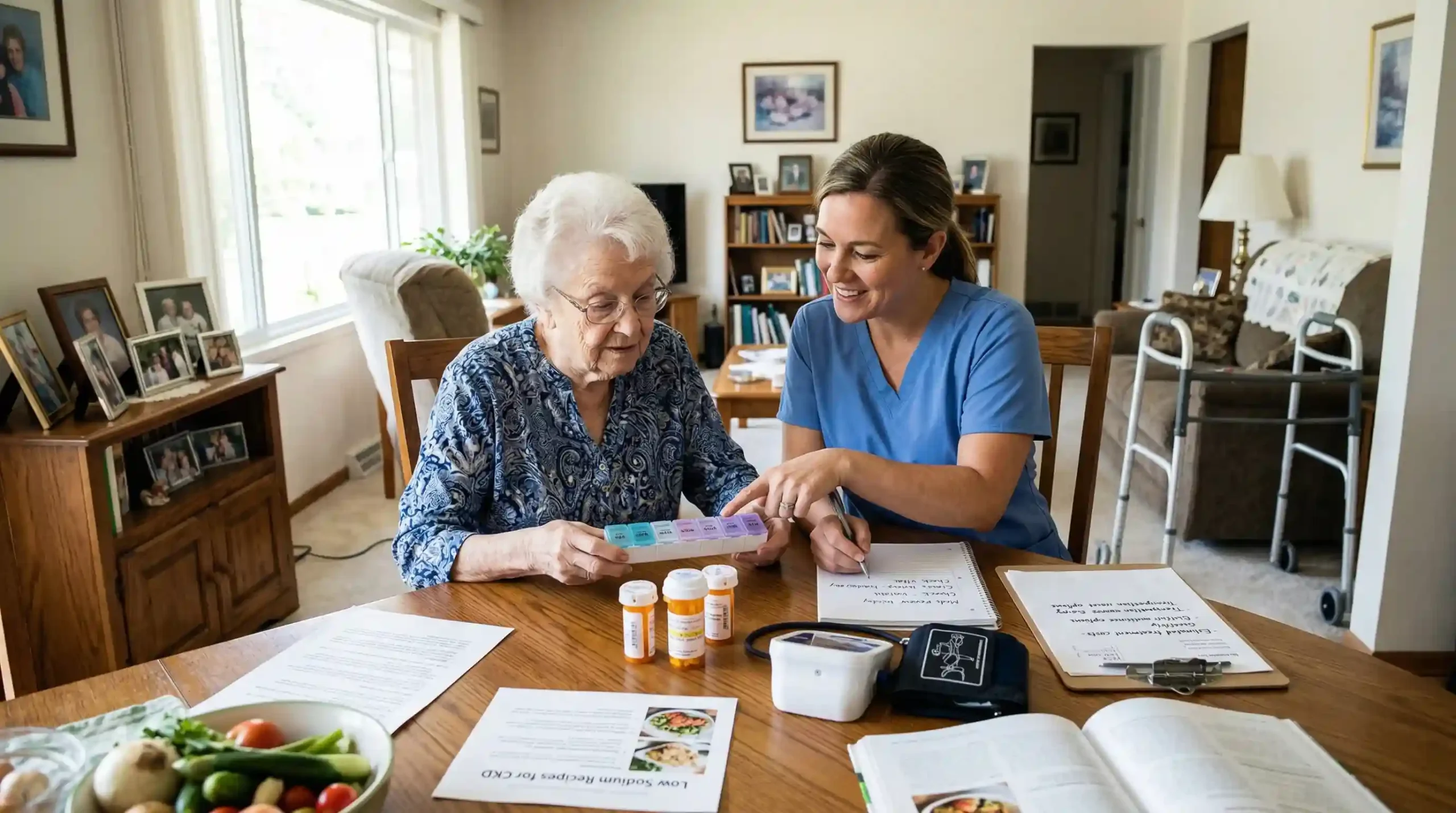
Chronic illnesses like kidney disease, heart failure, or diabetes often require careful monitoring at home. Programs that help with chronic illness support can include creating a ckd nursing care plan or other condition specific guidance.
For example, I assisted a family in setting up a care plan for a parent with CKD. Nurses coordinated with the physician, monitored weight and blood pressure, and ensured medication schedules were followed. Even small adjustments like coordinating meals with dialysis requirements made a big difference in comfort and safety.
Home based chronic care support often prevents hospital readmissions and keeps daily life manageable.
Palliative and Comfort Focused Care Options
Some families need support when a loved one is dealing with a serious illness or approaching end of life. Greater choice at home palliative focuses on comfort, dignity, and symptom management.
Caregivers work with nurses and physicians to manage pain, support emotional needs, and assist with daily activities. The goal is not just medical treatment, but quality of life at home. Families often tell me that having a structured palliative plan at home reduces stress and allows them to spend meaningful time together.
Step by Step: How to Apply for Home Health Care Assistance in Illinois
Applying for home health care assistance can feel overwhelming, but breaking it down into steps makes it manageable.
- Assess your loved one’s needs: Identify the type of care required nursing, therapy, personal care, or a combination.
- Gather financial and medical information: Programs usually need proof of income, bank statements, insurance details, and recent medical records.
- Contact your local agency: The Illinois Department on Aging or your local Area Agency on Aging is a good starting point. Ask for an intake assessment.
- Complete the application: Fill out forms carefully. Include all requested documents to avoid delays.
- Home assessment: A nurse or social worker may visit to evaluate your loved one’s abilities and care needs.
- Receive approval and plan care: Once approved, you’ll receive a care plan outlining services, schedule, and coverage.
- Ongoing updates: Most programs require periodic reassessments to ensure services still match your loved one’s needs.
Common Application Mistakes Families Should Avoid
From experience, families often make a few avoidable errors:
- Incomplete documentation: Missing paperwork is the most common reason for delays. Always double check forms.
- Underreporting needs: Some families minimize daily struggles, but accurate reporting ensures appropriate support.
- Waiting too long: Don’t delay applying because you think your loved one doesn’t need it yet. Needs can escalate quickly.
- Ignoring regional differences: Especially in southern Illinois, not all agencies cover all areas. Call ahead to confirm service availability.
- Skipping reassessments: Programs require updates; missing them can result in lost services.
Valentine Home Health Care
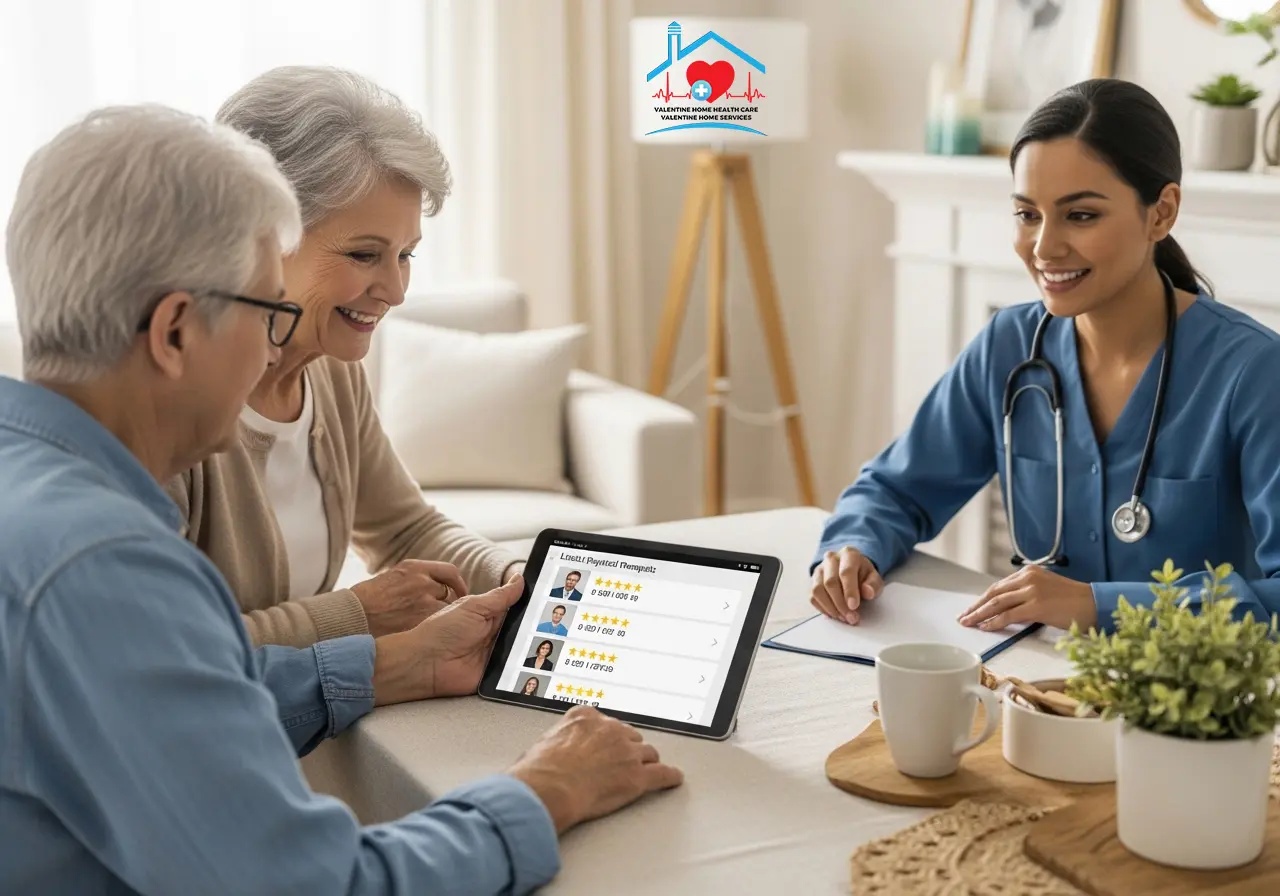
Valentine Home Health Care provides professional in home support for seniors and people with medical needs in Illinois. Their approach focuses on individualized care planning, offering nursing, therapy, and personal assistance tailored to each patient. Caregivers work closely with families to support daily routines and ensure safety at home, making home health care in Illinois accessible to those who need it.
Questions Families Often Ask
My parent resists having a caregiver. What can I do?
Start small. Introduce a caregiver for short visits, focusing on help with tasks your loved one accepts. Gradually build trust.
Do I have to pay for all services out of pocket?
Not always. Assistance programs can cover most or all costs depending on income and eligibility.
How often will a nurse visit?
Frequency depends on needs. Some get weekly visits; others have daily support or therapy sessions.
Can care plans change over time?
Yes. Programs reassess needs regularly and adjust services accordingly.
Are caregivers trained for dementia or chronic illness?
Many agencies provide specialized training. Always ask about experience with your loved one’s condition.
Conclusion
Home health care assistance programs in Illinois exist to help families keep loved ones safe, healthy, and comfortable at home. The process can seem daunting, but taking it step by step makes it manageable. Understanding eligibility, matching services to needs, and avoiding common mistakes can make the journey smoother.
With careful planning and support from trained professionals, families can access nursing care, therapy, daily living assistance, and specialized programs like dementia care or palliative support. Staying informed and patient through the application process can open doors to care that improves quality of life and provides peace of mind.