Well, if you are reading this, chances are someone you love has just been diagnosed with Parkinson’s disease. Or maybe the doctor said the words, and everything after that felt blurry. I have sat at many kitchen tables with families at that exact moment. Coffee going cold. Someone was staring at the floor. Someone else asking questions they barely hear the answers to.
Parkinson’s disease has a way of arriving quietly, then slowly taking up more and more space in a family’s life. It brings fear, confusion, and a lot of what happens now? questions. So let’s slow things down here. Take a breath. We will talk through this together, the same way I would if I were sitting across from you, not rushing, not talking over you, and not pretending this is easy.
You do not need to understand everything at once. You just need a place to start.
What Parkinson’s Disease Really Is?
Parkinson’s disease is a neurological condition. That sounds big and scary, but at its core, it means something in the brain is not working the way it used to. Deep inside the brain, there are cells that make a chemical called dopamine. Dopamine helps control smooth, purposeful movement. It helps your body know when to start moving, stop moving, and move in a coordinated way. In Parkinson’s disease, those dopamine producing cells slowly become damaged or die.
Because this happens gradually, symptoms also tend to show up slowly. A slight tremor. A little stiffness. Movements that feel slower than they used to. At first, many people brush these things off as normal aging or stress. I have watched patients say, Oh, I’m just stiff in the mornings, long before anyone ever said the word Parkinson’s.
And Parkinson’s is not just about movement. Over time, it can affect mood, sleep, digestion, thinking, speech, and emotions. It touches the whole person, not just their hands or legs.
One thing I want to say clearly, because families often worry about this. Parkinson’s disease is not contagious. You cannot catch it. And most of the time, it is not something you caused.
What Causes Parkinson’s Disease?
Families ask this question almost immediately. What causes Parkinson’s disease? Did we do something wrong? Was it the job? The environment? Genetics?
The honest answer is we still do not fully know.
For most people, Parkinson’s disease seems to come from a combination of things. Genetics may play a small role, especially if several family members have had it. Environmental factors may play a role too. Exposure to certain chemicals, pesticides, or heavy metals has been linked in some studies. Head injuries may increase risk.
But in many cases, there is no clear reason. I have cared for farmers, teachers, factory workers, office workers, people who exercised daily, people who did not. Parkinson’s does not follow neat rules.
This uncertainty can be frustrating. Families want something concrete to point to. Something to blame. But most of the time, Parkinson’s disease is not something anyone could have prevented.
How Parkinson’s Is Diagnosed?
How Parkinson’s is diagnosed is another area that causes a lot of anxiety.
There is no single blood test or scan that says, Yes, this is Parkinson’s disease. Diagnosis usually happens through careful observation and conversation. A neurologist, often a movement disorder specialist, listens to the patient’s history and watches how they move.
They look for certain signs. Tremor at rest. Muscle rigidity. Slowness of movement. Changes in posture or walking. Reduced facial expression. Softer speech. Smaller handwriting.
Sometimes doctors will order imaging tests, like an MRI, not to confirm Parkinson’s, but to rule out other conditions that can look similar. In some cases, they may start Parkinson’s medication and see how the person responds. A good response can help support the diagnosis.
This process can feel slow. Families sometimes leave appointments feeling unsure. That is normal. Parkinson’s disease often reveals itself over time, not all at once.
How Fast Does Parkinson’s Disease Progress?
This is one of the hardest questions, and I wish there were a simple answer. How fast Parkinson’s disease progresses depends on the person.
Some people live many years with mild symptoms that change very slowly. Others notice changes more quickly. Age at diagnosis, overall health, and how the body responds to medication all play a role.
Parkinson’s disease is often described in stages, but real life is not as tidy as a chart. People do not move neatly from one stage to the next. They have good days and bad days. Weeks where things feel stable, then periods where new challenges appear.
Early on, symptoms may be mild and manageable. In the middle stages, movement becomes more difficult, and daily activities may take longer. Later stages can bring balance problems, falls, swallowing difficulties, and sometimes cognitive changes.
I have seen people live meaningful, connected lives with Parkinson’s disease for many years. Progression does not mean life stops. It means life changes, and families adjust together.
How Parkinson’s Affects Daily Life?
This is where Parkinson’s disease becomes very real for families.
Movement is usually the first thing people notice. Walking may become slower. Steps smaller. Turning takes more effort. Getting up from a chair can feel like climbing a hill. Tremors can make tasks like buttoning a shirt or holding utensils harder.
Speech can become softer or monotone. Some people have trouble finding words or keeping up in conversation. Eating may take longer. Swallowing can become tricky, especially later on.
Emotionally, Parkinson’s disease can bring anxiety, depression, or apathy. These are not signs of weakness. They are part of how the disease affects the brain. I have watched strong, capable people struggle quietly with mood changes they did not expect.
Sleep can be disrupted. People may act out dreams or have trouble staying asleep. Fatigue becomes a constant companion. Memory and thinking changes do not happen to everyone, but they can happen, especially in advanced stages. This can be frightening for families. We will talk more about that later.
Parkinson’s Disease Nursing Care
Parkinson’s disease nursing care is about paying attention to the whole picture, not just symptoms on a checklist.
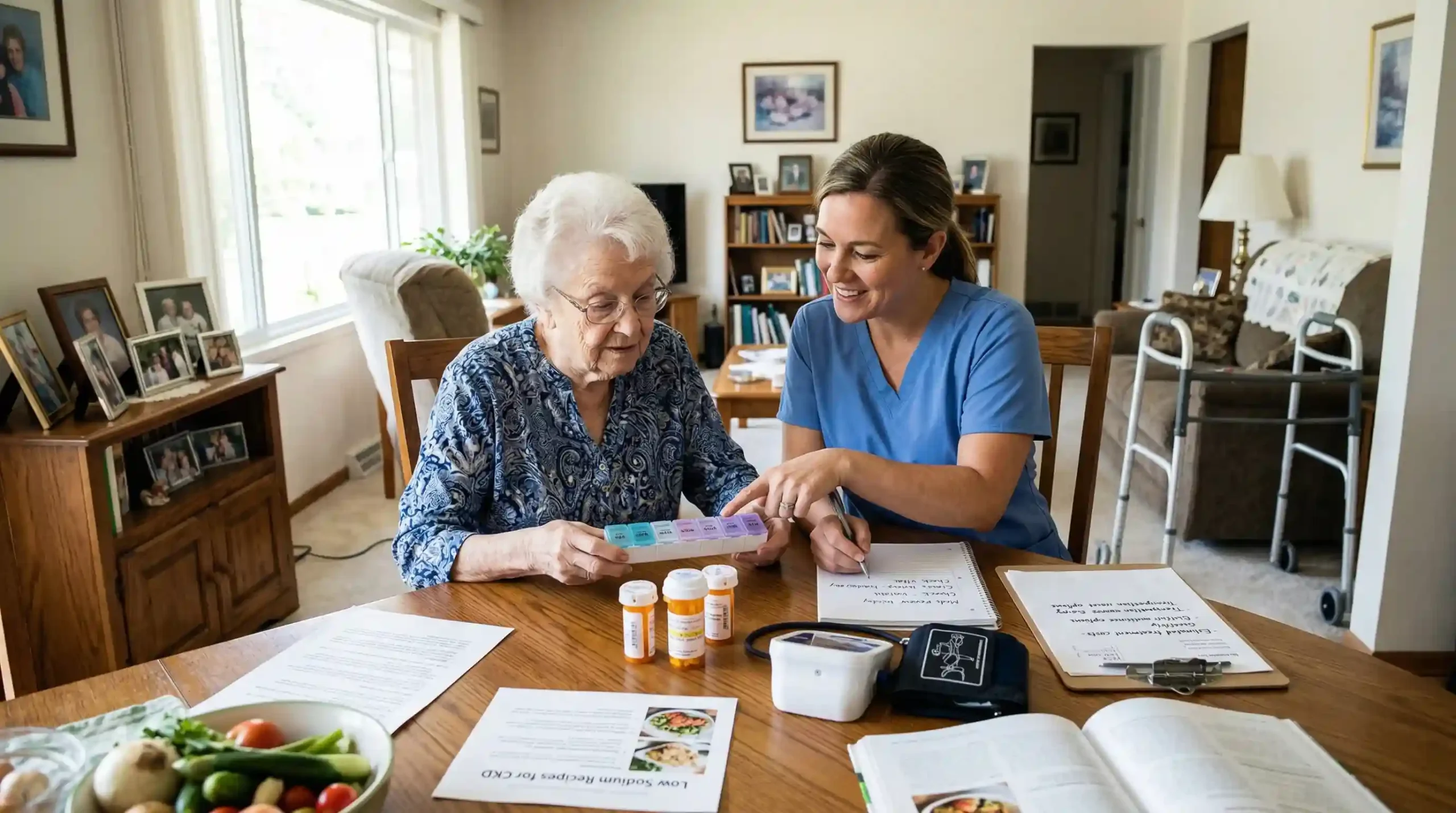
Medication management is a big part of care. Parkinson’s medications work best when taken on a very specific schedule. Timing matters. A dose taken too late can mean stiffness, freezing, or tremors returning. Nurses often help families understand schedules, side effects, and what to watch for.
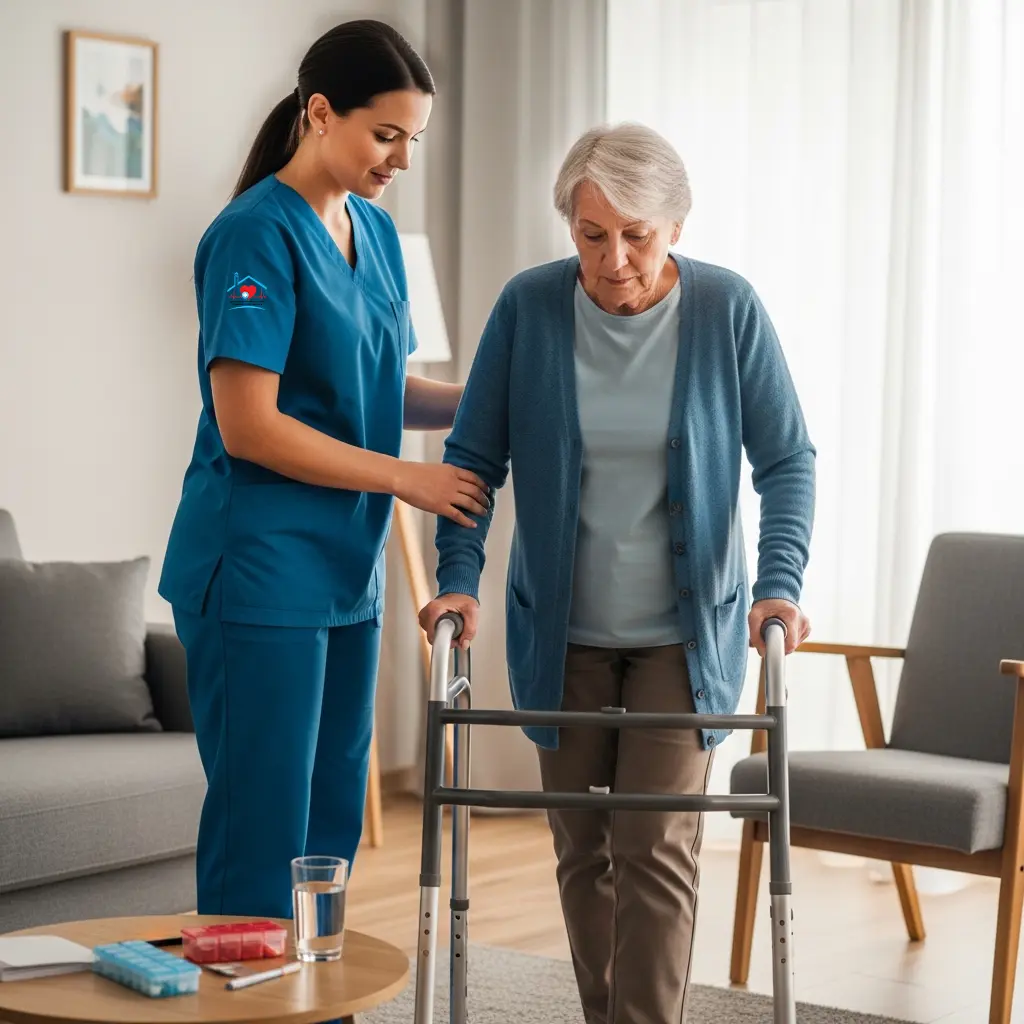
Safety is another focus. Fall prevention becomes critical. This might mean removing rugs, improving lighting, adding grab bars, or adjusting footwear. Nurses watch how someone moves and suggest small changes that can make a big difference.
Monitoring symptoms over time helps doctors adjust treatment. Changes in movement, mood, sleep, or swallowing are important to note. Nursing care also includes education. Helping families understand what is happening so they feel less helpless.
And sometimes, nursing care is simply listening. Sitting with someone who is frustrated. Reassuring a spouse who is exhausted. That matters more than people realize.
Parkinson’s Disease Caregiver Support
Caregiving can be deeply meaningful, but it is also exhausting. Parkinson’s disease caregiver support is not a luxury. It is a necessity.
I have seen spouses slowly disappear into the role of caregiver. They stop sleeping well. They stop seeing friends. They stop talking about how hard it is because they feel guilty for struggling.
Burnout is real. So is grief, even while the person you love is still here. Families grieve the loss of ease, independence, and plans they once had.
Support can come in many forms. Education. Counseling. Respite care. Support groups. Even just having someone say, This is hard, and you are not failing.
Caregivers need care too. Parkinson’s affects the whole family, not just the person diagnosed.
Elderly and Advanced Parkinson’s Care
As people age, Parkinson’s disease elderly care becomes more complex. Bodies recover more slowly. Balance worsens. Medical conditions pile up.
In advanced stages, some people develop dementia related to Parkinson’s disease. This can include memory loss, confusion, hallucinations, or changes in personality. It is heart breaking and frightening for families. I have watched adult children struggle to recognize the parents they once knew.
Care at this stage focuses on comfort, dignity, and safety. Eating and swallowing may require special attention. Communication may rely more on patience and nonverbal cues. Routines become incredibly important.
Families often need more help at this stage, and that is okay.
Home Care for Parkinson’s Patients
Many families ask about staying at home. In home Parkinson’s care USA is often the preferred choice because home feels familiar and safe. When people search for Parkinson’s home care near me, what they are really asking is, Can we manage this at home without falling apart?
In many cases, yes, with the right support. For families in Illinois, Parkinson’s disease home care in Illinois can include skilled nursing, therapy, and personal care support. Some families look specifically for Parkinson’s disease home care in Lemont Illinois because they want caregivers who understand both the disease and the community. Home care is not about giving up independence. It is about preserving it as long as possible.
Daily Living Support
Daily life does not stop because Parkinson’s disease enters the picture. People still need help with ordinary things.
Bathing can become difficult and dangerous. Caregivers can help ensure safety while respecting privacy. Meals may need to be softer, smaller, or timed around medication. Medication reminders and organization are critical.
Mobility support might mean assistance with walking, transferring, or using mobility aids. Emotional comfort matters too. Sometimes the most important thing a caregiver does is sit and listen.
Families in different areas look for different services. Home health care services in Lemont, home care New Lenox Illinois, dementia home care New Lenox Illinois, elderly home care Naperville Illinois, senior home care in Lemont IL, or daily living assistance for seniors in East St. Louis IL. No matter the location, the needs are often the same. Safety. Consistency. Compassion.
Common Questions Families Ask
Will Parkinson’s disease shorten life expectancy?
Parkinson’s itself is not usually fatal. Many people live for many years with the disease. Complications like falls or swallowing problems can affect health, but with good care, people can live full lives.
Is Parkinson’s disease painful?
It can cause discomfort, stiffness, and muscle pain. Pain is not always talked about enough. It should be addressed as part of care.
Can stress make symptoms worse?
Yes. Stress can significantly worsen symptoms. Creating calm routines and emotional support helps more than families realize.
Should we plan for the future now?
Planning does not mean giving up hope. It means reducing fear later. Conversations about care preferences are acts of love.
Closing
If you take nothing else from this guide, take this. You are not alone. Parkinson’s disease is complicated, but it is not something families have to face without understanding or support. I have walked alongside many families through this journey. There will be hard days. There will also be moments of laughter, connection, and quiet strength you did not know you had. Understanding Parkinson’s disease does not make it disappear. But it does make it less frightening. Less unknown. And sometimes, that is enough to help you take the next step. One day at a time is okay. Truly. Read more