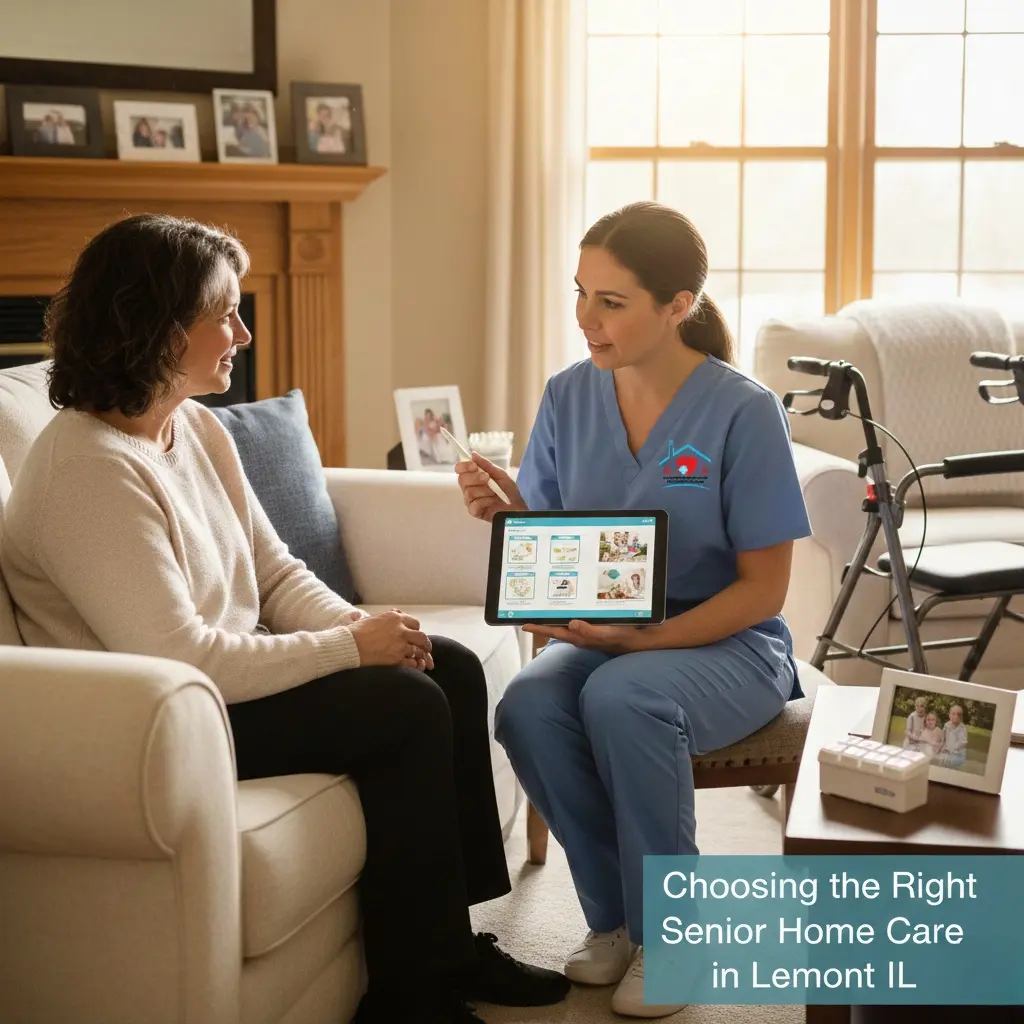
Choosing the right home care provider for an aging loved one is a big and sometimes emotional decision. If you live in or near Lemont, Illinois, you want care that’s safe, respectful, and tailored to your family’s needs. This guide walks you through the most important things to consider when looking for senior home care in Lemont, IL. You’ll find practical steps, key questions to ask, examples, and local context to make your search easier and more confident.
Lemont is a small, close knit community with active senior residents. Understanding local services, regulations, and how to match a provider’s offerings to your specific needs will help you make a choice that improves daily life and preserves independence. Wherever you are in this process, starting research, comparing agencies, or preparing to meet a caregiver, this post gives clear, step by step advice you can use right away.
Why thoughtful choice matters
Finding the right in home care matters because it affects daily safety, health, and quality of life. The right caregiver supports personal care, medication routines, companionship, and often helps coordinate with doctors and family. A poor fit can lead to missed care, stress, and extra costs.
In Lemont, the population includes a significant number of older adults, and local agencies provide a range of services from non medical companionship to skilled nursing and rehabilitation. Knowing the local landscape and what to ask will save time and help protect your loved one.
Quick checklist before you start
Use this short checklist to focus your search. It helps you gather basic facts and priorities before reaching out to agencies.
- Identify the level of care needed (personal care, medical care, companionship).
- Decide on schedule needs (hours per week, overnight, live in).
- Check budget and possible payment sources (private pay, long term care insurance, VA benefits).
- Compile a list of local agencies to contact.
- Prepare questions about licensing, staff training, background checks, and client references.
- Plan a trial visit or a short term contract to evaluate the fit.
Understand the types of senior home care
Knowing the difference between services helps you match care to needs.
Non medical home care
Non medical home care focuses on daily living support and companionship. Tasks include bathing, dressing, meal preparation, light housekeeping, transportation, and social engagement. This is often called personal care or home support for elderly. Agencies and private caregivers offer these services and usually do not perform medical procedures.
Home health care (medical)
Home health services include skilled nursing, physical therapy, occupational therapy, and medication management. These services are typically prescribed by a doctor and can be covered by Medicare or private insurance in some cases. If your loved one needs wound care, IV therapy, or regular nursing assessments, a licensed home health agency is appropriate. Local providers in and around Lemont offer both non medical and medical options.
Hospice and palliative care
For people with advanced illness, hospice and palliative care provide comfort-focused services, symptom control, and emotional support for families. These services can be provided at home and are often covered by Medicare when eligibility criteria are met.
Companion and volunteer programs
Sometimes the best help is a friendly companion who can offer conversation, escort to appointments, and a watchful presence. These programs are good for reducing loneliness and improving daily mood.
Clarify needs and goals
Start by making a clear, written picture of what your loved one needs now and what might be needed soon.
Questions to answer:
- Can they walk independently? Do they use a walker or wheelchair?
- Are they taking medications that need monitoring or administration?
- Do they have chronic conditions (diabetes, heart disease, COPD, memory loss) that require specific training?
- Do they need help with bathing, dressing, or toileting?
- How much supervision is needed to stay safe (night checks, fall risk)?
- What social and emotional needs must be met (companionship, activities)?
Example: Mrs. Garcia needs help bathing three times a week, medication reminders twice daily, and someone to drive her to the senior center twice a week. That points toward non medical personal care with a reliable caregiver who can handle light transportation.
Write down the tasks and the frequency. This becomes your care brief to share with agencies so they can propose an appropriate plan.
Know how care is paid for
Understanding payment options avoids surprises.
- Private pay: Most families pay caregivers or agencies directly. Rates vary with skill level and schedule. Living in care or 24 hour care costs more.
- Medicare: Pays for medically necessary home health services ordered by a doctor. It typically covers skilled nursing and therapy, not long term personal care. Ask your doctor if home health can be prescribed.
- Medicaid: May cover long term home and community based services for eligible individuals. Eligibility depends on income and assets.
- Long term care insurance: Policies vary. Check your policy for home care benefits and prior authorization requirements.
- Veterans benefits: Veterans and surviving spouses may qualify for home care programs from the VA.
Tip: Ask each agency about accepted payment methods. Some agencies will work with insurers or help file claims.
Where to search in Lemont
Start locally to find providers who know the area and can respond quickly.
- Ask friends, neighbors, the family doctor, or the local hospital for recommendations.
- Contact agencies that list Lemont in their service area many national and local agencies serve Lemont and nearby towns. Examples include national franchises and local agencies that offer tailored services.
- Use official resources like Medicare’s Care Compare to verify licensed home health agencies that serve Lemont.
- Attend local community events or contact the Lemont Area Historical Society and senior centers to ask about caregiver referrals and local programs. (Lemont has an active downtown and community life that supports older residents.)
When contacting agencies, ask if they provide services in your specific Lemont neighborhood and whether they have bilingual caregivers if language is a concern.
Questions to ask agencies and caregivers
Prepare a short list of questions to compare agencies fairly. Here are the most important ones:
- What services do you provide? (Personal care, skilled nursing, therapy, companionship, transportation.)
- Are you licensed and insured? Ask to see licenses and proof of liability insurance.
- What training do your caregivers receive? Ask about dementia training, fall prevention, medication safety.
- Do you perform background checks? Request criminal background and reference checks.
- How do you match caregivers to clients? Inquire about personality matching and ability to meet specific cultural or language needs.
- Who supervises the caregiver and how often? Supervision indicates quality control and helps address problems quickly.
- How do you handle replacement care if a caregiver is sick?
- What are your rates and billing practices? Ask for a sample invoice and cancellation policy.
- Do you have references from local clients? A reputable agency will provide references.
- How do you document care? Ask about daily logs, visit notes, and how the family is kept informed.
- What happens in an emergency? Request the agency’s emergency response plan and contact numbers.
Example: If cognitive decline is a concern, ask if caregivers have specialized dementia training (e.g., Alzheimer’s care) and if they use proven approaches like redirection, simplified communication, and structured routines.
Check credentials and reputation
A provider’s credentials and reputation tell you a lot about reliability.
- Licensing: For medical home health agencies, check state licensing through the Illinois Department of Public Health where applicable. For non medical agencies, confirm local business registration and any certifications.
- Medicare listing: Medicare’s Care Compare shows licensed home health agencies and their reported services. This is especially useful if you need skilled nursing or therapy.
- Reviews and references: Look for online reviews on trusted sites and ask the agency for local references. Speak directly to current or past clients when possible.
- Better Business Bureau: Check the BBB for complaints and how they were resolved.
- Professional associations: Membership in elder care organizations or local healthcare coalitions can indicate professional standards.
Local presence matters. Agencies that have worked in Lemont and surrounding Cook County neighborhoods will be familiar with local hospitals, pharmacies, and community services that help coordinate care.
Meet the caregiver and evaluate the fit
A face to face meeting (or video call) is the best way to assess compatibility.
What to observe:
- Punctuality and professionalism: Did the caregiver arrive on time? Were they courteous and engaged?
- Communication style: Do they speak clearly and listen to both you and your loved one?
- Skill and confidence: Ask them to demonstrate how they would help with a transfer, medication reminder, or personal care task (if appropriate).
- Compassion and patience: These traits are essential for long term care satisfaction.
- Small talk and shared interests: A caregiver who can connect over hobbies or stories often becomes a trusted companion.
Arrange a short trial visit (a few hours) before committing to a long term schedule. This allows both sides to test the routine and make changes without pressure.
Safety and quality of care
Safety checks are non negotiable, especially for seniors with mobility or medical needs.
- Medication safety: Ask if caregivers can assist with medication reminders or direct medication administration. For complex medication administration (injections, IVs), require a licensed nurse.
- Fall prevention: Make sure the caregiver understands fall risk factors and home safety (clear pathways, proper lighting, bathroom grab bars).
- Infection control: Confirm healthy hygiene practices, especially after illness seasons or for immunocompromised seniors.
- Record keeping: Daily logs should note care tasks, changes in mood or health, and any incidents.
- Reporting procedures: Ask how the agency reports and addresses mistakes or accidents.
If the person has memory loss, make sure the caregiver knows techniques for safe wandering prevention, maintaining routines, and engaging activities.
Personal care vs. medical care when to choose which
Deciding between non medical and medical care depends on specific medical needs.
Choose non medical personal care if:
- The main needs are bathing, dressing, cooking, light housekeeping, and transportation.
- You need companionship and help with your daily routine.
- There is no need for skilled medical procedures.
Choose home health (medical) if:
- A doctor prescribes skilled nursing or therapy (wound care, injections, speech/physical therapy).
- The person needs medical monitoring or rehabilitation after hospitalization.
- Medicare or insurance is covering medically necessary services.
Often, families use a combination: a home health nurse for specific medical tasks and a caregiver for daily support.
Matching personality and cultural needs
Care that respects cultural preferences and personal history improves comfort and trust.
- Ask agencies if they have caregivers who speak the preferred language.
- Look for caregivers who understand dietary preferences, religious practices, and cultural norms.
- If your loved one has a strong hobby or routine (gardening, cooking, music), see if a caregiver shares those interests for better engagement.
Example: Mr. Thompson enjoyed fishing. A caregiver who could discuss fishing stories or help him watch fishing videos would improve his mood and cooperation with care.
Technology and monitoring options
Modern tools can help families stay connected and informed.
- Care apps: Many agencies use apps or online portals with visit notes, care plans, and photos.
- Medication reminders: Electronic pill dispensers and reminder systems reduce missed doses.
- Emergency alert systems: Wearable pendants or wall mounted buttons connect to emergency services.
- Telehealth: For routine follow ups, telehealth can save travel time while keeping the doctor involved.
Ask an agency how they document care and whether they offer family access to notes. Good agencies welcome family members into the communication loop.
Red flags to watch for
Some warning signs mean you should pause and reassess.
- No background checks or reluctance to provide them.
- Lack of a clear contract or confusing billing.
- Frequent caregiver turnover without reasonable explanations.
- Caregiver arrives late, seems tired, or does not follow care instructions.
- Unexplained bruises, missing items, or financial concerns (report suspected abuse immediately).
- An agency refuses to provide references or answer questions about supervision and training.
If you suspect mistreatment or neglect, contact local adult protective services and the police if there is immediate danger.
Making a care plan and contract
A clear written care plan and contract protect both the family and the agency.
Include in the plan:
- Detailed list of tasks and the schedule.
- Emergency contacts and physician information.
- Medication list with dosages and times.
- Preferred daily routine and activities.
Include in the contract:
- Hourly rates and fees for extra services.
- Billing schedule and accepted payment methods.
- Notice period for ending services.
- Replacement policies for caregiver absences.
- Liability and insurance statements.
- Keep copies of all agreements and update the plan as needs change.
How to involve family in day to day care decisions
Family involvement keeps care coordinated and reduces stress.
- Assign a primary family contact to speak with the agency.
- Schedule regular family meetings (in person or virtual) to review the care plan.
- Share responsibilities: one family member handles finances, another monitors medications, another helps with appointments.
- Keep a shared notebook or digital file with updates, questions for the nurse, and important dates.
Clear communication reduces misunderstandings and ensures everyone knows who does what.
When to consider a higher level of care
Sometimes home care is not enough. Re evaluate if you notice:
- Repeated falls or injuries.
- Rapid weight loss or decline in mobility.
- Increasing confusion, wandering, or inability to follow safety instructions.
- Medical needs that exceed home capabilities.
- Family burnout despite support.
Options beyond home care include assisted living, memory care facilities, or nursing homes. However, many seniors prefer to stay home as long as it is safe and feasible. A geriatric care manager or the primary care physician can help with transition planning.
Using local resources in Lemont and nearby areas
Lemont benefits from nearby agencies and community programs. Use local senior centers, churches, and community organizations for referrals, volunteer companion programs, and social activities. Several agencies advertise services in the Lemont area, and Medicare lists agencies authorized to provide home health in the village. Checking local providers, reading reviews, and asking neighbors about their experience gives a realistic picture of options in Lemont.
Example: Comparing two hypothetical care plans
These examples show how different scenarios lead to different care solutions.
Scenario A: Mild mobility limitations
- Needs: Help bathing twice weekly, meal prep, weekly laundry, transportation to medical appointments.
- Best fit: Non medical caregiver for 10 to 15 hours per week, some family involvement, community activities for socialization.
Scenario B: Post hospital recovery
- Needs: Wound care, daily skilled nursing visits for 2 weeks, physical therapy 3 times a week, medication management.
- Best fit: Home health agency providing skilled nursing and therapy under a doctor’s orders; consider adding non medical caregiver for some personal care and errands.
These examples show how needs determine if you call a home health agency (medical) or a personal care agency (non medical).
Questions to ask during the first week of care
After services begin, check progress with these quick questions:
- Is the caregiver arriving on time and staying the scheduled hours?
- Are daily tasks being completed at the expected standard?
- Is the caregiver recording notes and reporting changes?
- Has the caregiver connected well with the senior (conversation, rapport)?
- Are there any concerns about safety, medication, or behavior?
Keep communication open and address small problems early. Most issues can be corrected with a supervisor’s involvement.
Keeping care affordable without sacrificing quality
Cost is always a concern. Ways to make care affordable:
- Combine paid care with family caregiving for lower hourly needs.
- Use respite programs for temporary relief to avoid long term full time paid care.
- Compare hourly rates and ask agencies about package deals or reduced hours with flexible scheduling.
- Check for local grants or nonprofit programs that help pay for companionship or short term help.
- Review long term care insurance policies and file claims early when coverage allows.
Remember: lowest cost isn’t always the best choice. Balance price with caregiver training, supervision, and clear contracts.
How to handle conflicts or problems
If issues arise:
- Speak directly and calmly with the caregiver first, sometimes small changes are all that’s needed.
- If unresolved, escalate to the agency supervisor with specific examples.
- Request a meeting with family and agency to revise the care plan.
- If serious misconduct or neglect occurs, involve local authorities and adult protective services.
Document all communications in writing or in a care notebook. Clear records help resolve disputes fairly.
Why local agencies can be advantageous
Local agencies understand community resources and can act quickly when needs change. They often have:
- Better knowledge of local doctors and pharmacies.
- Faster response times for schedule changes.
- Relationships with community senior centers and volunteer programs.
Large national agencies may offer consistent protocols and broader insurance handling, while local agencies may provide more personalized service. Choose what best fits your family’s priorities.
A note about Valentine Home Health Care
If you’re looking for services close to Lemont, consider asking about local agencies that offer flexible in home nursing and personal care. For example, Valentine Home Health Care provides both skilled nursing and home caregiver services in the Lemont area and is listed on official home health directories. If your needs include a mix of medical and personal support, ask agencies like this about care plans and whether they can coordinate skilled nursing visits along with daily personal assistance. Using local providers that advertise home care lemont il services may simplify scheduling and communication.
Final checklist before signing
Before you sign a contract, confirm the following:
- Services and hours are clearly written in the care plan.
- Rates, billing cycles, and cancellation policies are transparent.
- Background checks and caregiver training are in place.
- There is a supervisory contact and an emergency plan.
- Trial visit completed and both the senior and family are comfortable.
- References and licensing information verified.
Conclusion
Choosing senior home care in Lemont, IL is a process that’s easier when you break it into clear steps. Start by defining needs, investigate local agencies and their credentials, ask targeted questions, and arrange trial visits. Prioritize safety, communication, and cultural fit, these matter most for daily satisfaction and long term well being. Lemont residents benefit from a range of local and regional home care options. By using the checklists and questions in this guide, you’ll be prepared to compare agencies meaningfully and choose care that keeps your loved one safe, comfortable, and connected to the community. Trust your instincts, gather references, and don’t hesitate to ask for a short trial period before committing. When care fits both practical needs and personal preferences, it becomes a source of peace for the whole family. If you want, I can help you draft a short email template to send to local agencies, a list of interview questions tailored to your loved one’s needs, or a comparison spreadsheet to track responses from agencies. Which would you prefer?